
Explainer · July 24, 2026 · 5 min · By Nolan Achterman
Ivermectin vs. Metronidazole: What the Evidence Actually Says About Rosacea's Two Workhorse Creams
Both are first-line topicals for papulopustular rosacea, but they work through different mechanisms and the head-to-head data is more lopsided than many patients realize.
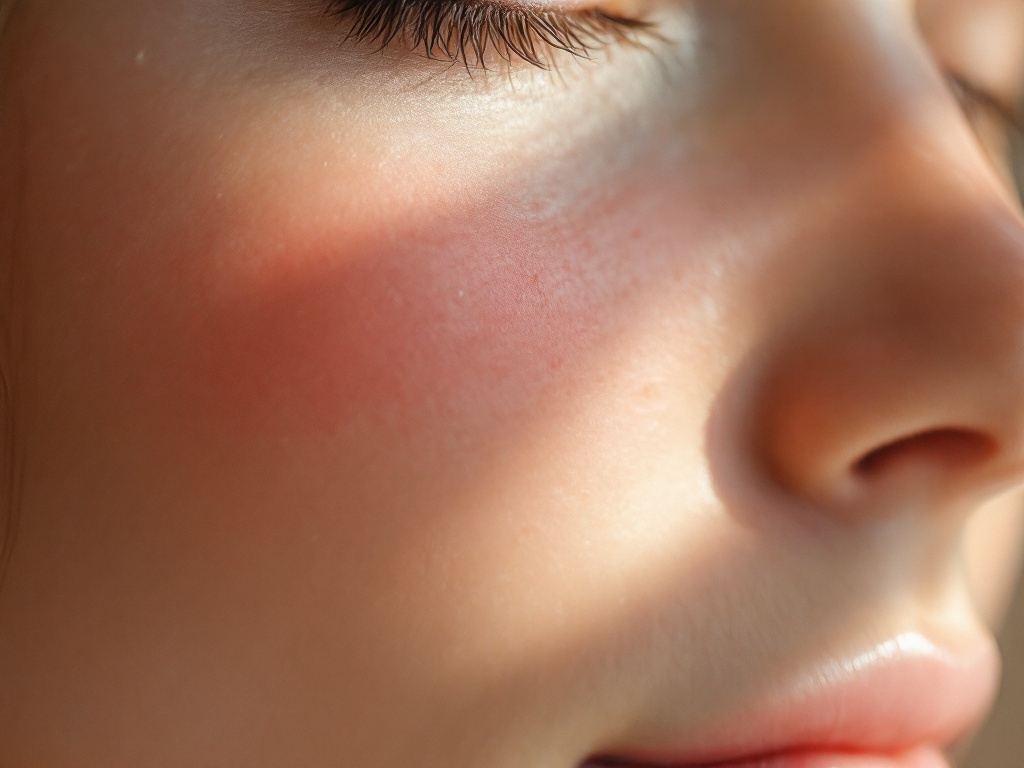
Ask ten people with papulopustular rosacea what they were first prescribed and most will name one of two creams: metronidazole or ivermectin. Both are approved for the bumps and pimples of rosacea, both are generally well tolerated, and both appear in every major treatment guideline. Yet they are not interchangeable, and the clinical trial record gives one of them a measurable edge for many patients. Here is a plain-language breakdown of how each works, what the comparative studies show, and how clinicians actually choose between them.
How metronidazole works, as far as anyone can tell. Metronidazole is an antibiotic, but its benefit in rosacea almost certainly has little to do with killing bacteria. At the concentrations used on skin, 0.75 percent or 1 percent, its main relevant action appears to be anti-inflammatory and antioxidant. It reduces reactive oxygen species generated by neutrophils, the immune cells that drive much of the redness and pustule formation in rosacea. This matters for expectations: metronidazole calms inflammation but does not address every upstream trigger, and improvement is typically gradual over 8 to 12 weeks. For an independent overview, see Rosacea treatment: topical and oral options.
How ivermectin works, and why the Demodex story matters. Topical ivermectin 1 percent has a dual mechanism. First, it is an antiparasitic that kills Demodex mites, the microscopic organisms that live in human hair follicles. People with rosacea tend to carry Demodex at densities several times higher than people without it, and mite fragments and their associated bacteria appear to activate the innate immune system through toll-like receptors, feeding the inflammatory cycle. Second, ivermectin has direct anti-inflammatory effects, dampening production of inflammatory cytokines. So it attacks both a suspected trigger and the downstream inflammation.
The head-to-head data. The most cited comparison is a large randomized investigator-blinded trial that ran ivermectin 1 percent cream once daily against metronidazole 0.75 percent cream twice daily for 16 weeks in people with moderate to severe papulopustular rosacea. Ivermectin produced a greater reduction in inflammatory lesion counts, roughly 83 percent versus 74 percent, and more participants reached clear or almost clear status. Extension data also suggested longer remission after stopping ivermectin, with a median time to relapse several weeks longer than metronidazole. These are meaningful differences, though not dramatic ones, and metronidazole still helped most people who used it.
So why is metronidazole still prescribed so often? Several practical reasons. It has decades of safety data, it is inexpensive and widely available as a generic in gel, cream, and lotion forms, and the gel formulation suits oily or acne-prone skin better than a rich cream. Ivermectin generics now exist in many markets but pricing and insurance coverage vary. For mild disease, the difference in outcomes may be small enough that cost and formulation preference reasonably drive the decision.
Tolerability is close to a tie. Both agents have low rates of irritation compared with many dermatologic topicals, which matters in rosacea because the skin barrier is often already compromised. Some ivermectin users report a temporary flare in the first one to two weeks, sometimes attributed to a reaction to dying mites, similar in concept to reactions seen when treating other organisms. This usually settles and is not a reason to stop unless it is severe. Metronidazole can cause mild stinging or dryness, particularly the gel on sensitized skin.
What neither cream does. This is where expectations most often go wrong. Neither ivermectin nor metronidazole meaningfully treats the persistent background redness of rosacea, which is driven by dilated and structurally abnormal blood vessels rather than active inflammation alone. That component responds to vascular lasers, intense pulsed light, or alpha-adrenergic topicals such as brimonidine or oxymetazoline, which temporarily constrict vessels. Neither cream treats ocular rosacea or phymatous changes. Matching the tool to the subtype remains the core principle of rosacea care.
How clinicians tend to decide. A reasonable pattern seen in practice: for moderate to severe papulopustular disease, ivermectin is often favored first based on the trial data, sometimes combined with a short course of low-dose oral doxycycline, which at sub-antimicrobial doses works as an anti-inflammatory rather than an antibiotic. For mild disease, cost-sensitive situations, or patients who did well on it previously, metronidazole remains a solid choice. Azelaic acid is a third option with its own evidence base and a different mechanism involving kallikrein 5 and cathelicidin pathways, worth its own discussion.
The bottom line. Both creams are legitimate first-line options with real evidence behind them. Ivermectin has the stronger comparative data for lesion clearance and remission length, likely because it targets Demodex in addition to inflammation. Metronidazole earns its place through affordability, formulation flexibility, and a long safety record. Whichever is chosen, give it a full 12 to 16 weeks before judging, keep the rest of the routine bland and barrier-supportive, and remember that the redness component usually needs a separate strategy.
Related reading: Ivermectin vs. Metronidazole: What the Evidence Actually Says About the Two Workhorse Topicals.
More in Explainer
View all →- Metronidazole, Azelaic Acid, or Ivermectin: How the Three Workhorse Topicals for Rosacea Actually Compare
- Ivermectin, Metronidazole, or Azelaic Acid: How the Three First-Line Topicals for Rosacea Actually Compare
- Ivermectin, Metronidazole, or Azelaic Acid: How the Three Big Topicals for Rosacea Actually Differ
- Ivermectin, Metronidazole, or Azelaic Acid: How the Three Big Topicals for Rosacea Actually Compare