
Treatment · June 28, 2026 · 6 min · By Oriana Sandoval
At-home red light therapy for rosacea: does an LED mask calm redness?
Red LED panels promise calm, anti-inflammatory light at home. Here is what they can and cannot do.
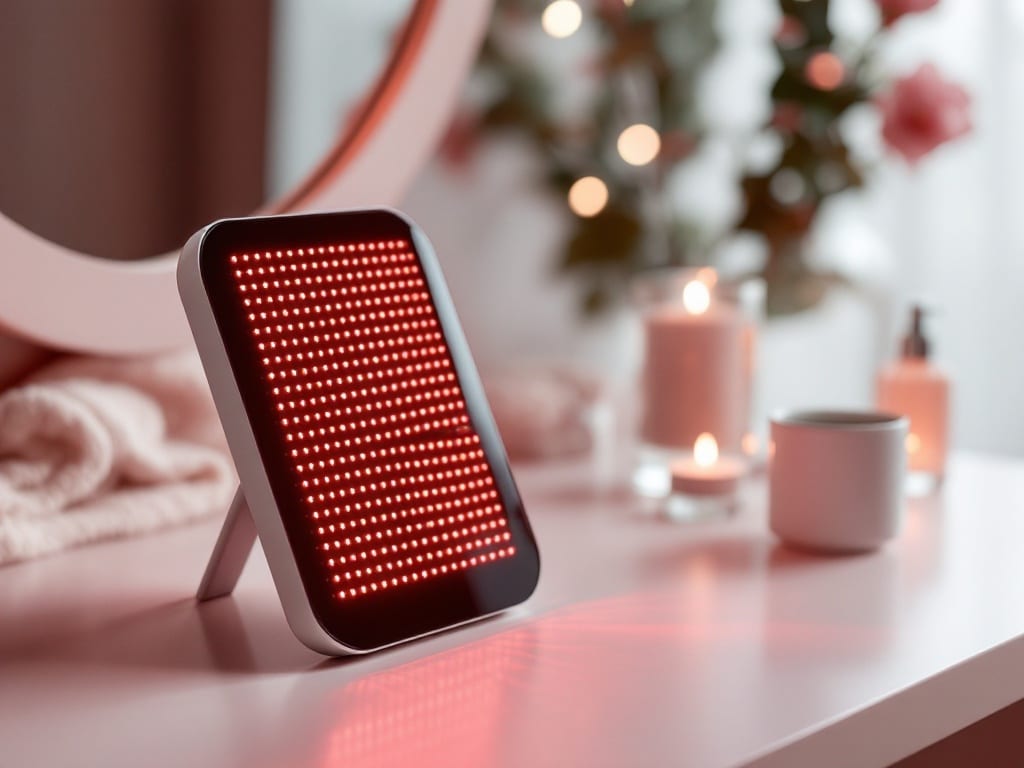
Red LED light therapy has jumped from the clinic to the bathroom shelf, and rosacea is one of the conditions people most often buy a home device to treat. The pitch is calming, anti-inflammatory light with no downtime. The reality is more modest, and worth understanding before you spend.
Red and near-infrared light are studied for their anti-inflammatory effects and their support of the skin barrier and wound healing. For rosacea specifically, the evidence is early and mixed: some people report less background redness and fewer bumps with consistent use, while controlled data lag behind the marketing. Unlike a vascular laser that targets visible vessels, LED does not selectively close broken capillaries, so it will not erase telangiectasia. For an independent overview, see Lasers and lights for facial redness and visible vessels.
Where LED can earn its place is as a gentle, ongoing calming step for the redness-and-flushing pattern, used alongside your core routine rather than instead of it. Home panels are lower powered than clinic devices, which makes them safer to use unsupervised but slower to show anything.
If you try one, buy on specifications rather than color. Look for a device that publishes its wavelength, usually around 630 to 660 nanometers for red, and its irradiance, and follow the session times the maker lists. Protect your eyes, keep sessions short and regular, and give it eight to twelve weeks before you judge it.
Heat is the honest caveat. Any device that warms the face can, paradoxically, trigger a flush in heat-sensitive rosacea, so hold it at the recommended distance and stop if a session leaves you redder than when you started. LED is a reasonable add-on for the right person. It is not a substitute for the treatments that address vessels and inflammation directly.
More in Treatment
View all →- Low-dose isotretinoin for rosacea: the option when topicals and doxycycline fall short
- Beta-Blockers for Rosacea Flushing: When Creams Are Not Enough for the Flush
- Brimonidine (Mirvaso) for Rosacea Redness: What It Does and the Rebound to Watch For
- Sulfur and sodium sulfacetamide for rosacea: the older topicals that still earn a place