
Explainer · October 25, 2026 · 7 min · By Nolan Achterman
Rosacea on lips? Why the rash around your mouth is often something else
Most people searching for rosacea on lips are looking at a rash that rosacea rarely causes. The tell is a thin rim of normal skin hugging the lip line, and the most common trigger is a steroid people never thought to mention: the hydrocortisone tube, the asthma inhaler, the nasal spray.
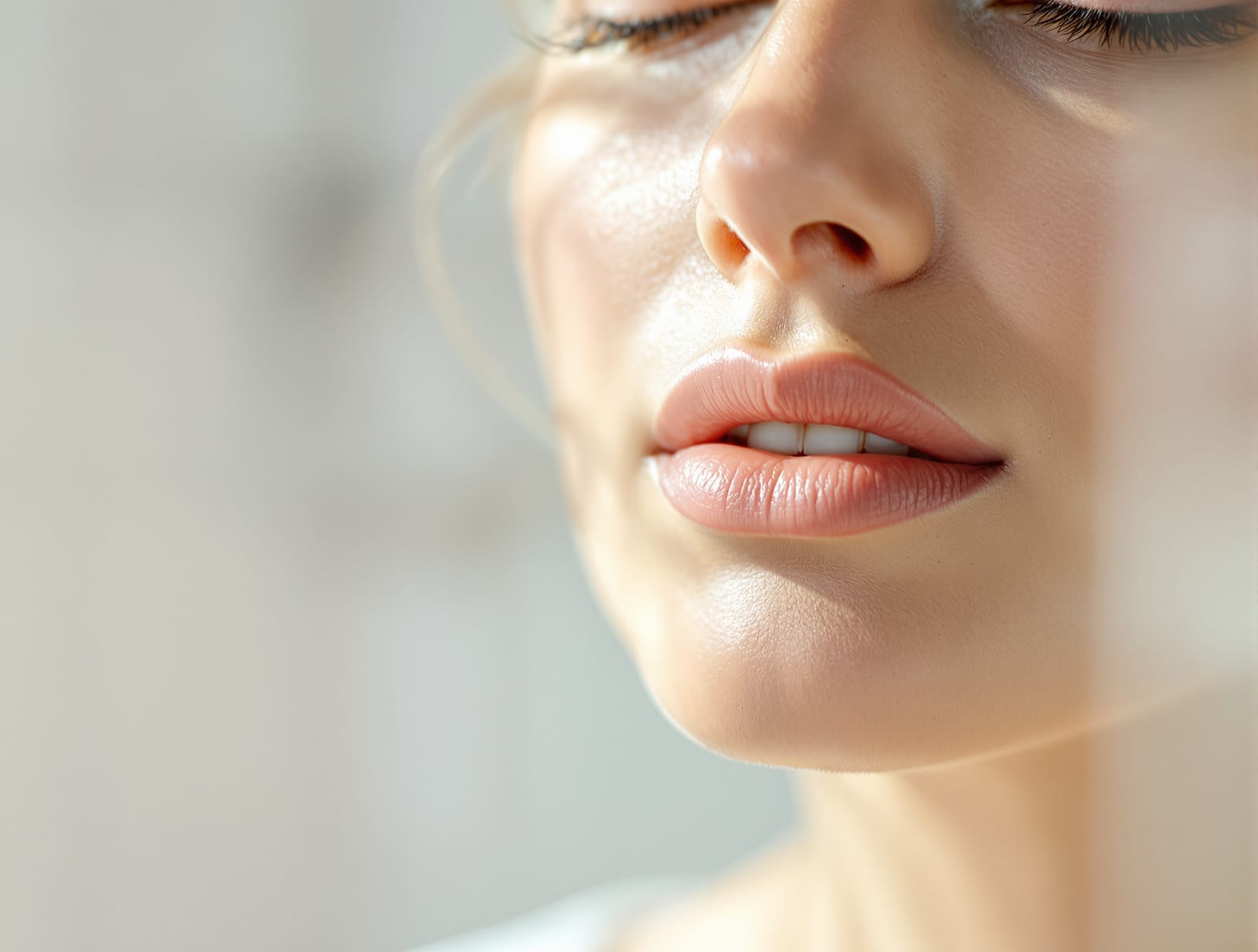
The message usually arrives with a photo. Small red bumps around the mouth, sometimes up the sides of the nose, a little flaky, a little stinging, and a reader who has decided it must be rosacea on the lips because they already have some redness on their cheeks. It is a reasonable guess. It is also, more often than not, the wrong one, and the wrong guess matters here because the most common home fix for a red rash around the mouth is the thing most likely to make this one worse.
Classic rosacea lives on the central, convex parts of the face: the cheeks, nose, chin and forehead. The American Academy of Dermatology notes that it can spread to the chin, forehead, ears, neck and chest in some people, but the lips themselves are not where rosacea typically shows up. When the problem is a ring of bumps around the mouth, the condition dermatologists think of first is perioral dermatitis, sometimes called periorificial dermatitis because it can also sit around the nose and eyes.
The original element in this piece is a five-question mirror check that sorts a rash around the mouth into the four things it most often turns out to be: perioral dermatitis, rosacea reaching the chin, steroid-provoked rosacea, or a problem with the lips themselves. The individual facts come from the sources linked below. The sequence, and the plain reading of each answer, are ours. It will not replace an exam, but it will tell you what to say at one, and what to stop doing before you get there.
Rosacea on lips or perioral dermatitis: why the difference changes everything
The two conditions look alike and are treated with some of the same drugs, which is why they get confused. Topical metronidazole and the tetracycline family of oral antibiotics are used for both. A review in the American Journal of Clinical Dermatology found that oral tetracycline had the best evidence for perioral dermatitis, with topical metronidazole, erythromycin and pimecrolimus also supported, and noted that oral tetracyclines are not suitable for children under eight (Tempark and Shwayder, 2014). If you already use metronidazole for rosacea, that overlap can make the distinction feel academic.
It is not, because of what triggers perioral dermatitis. A systematic review in the Journal of Cosmetic Dermatology concluded that the strongest evidence points to topical corticosteroid misuse as the principal cause (Searle, Ali and Al-Niaimi, 2021). The AAD is blunt about it: to clear perioral dermatitis you must stop applying all corticosteroids to the skin, including over the counter hydrocortisone, and the rash can get worse when you do (AAD). So the person who dabs hydrocortisone on a red patch by the mouth gets a few days of relief, stops, flares, dabs again, and slowly trains the rash to depend on the cream. We cover the rosacea side of that cycle in our page on steroids and rosacea.
The five-question mirror check
Stand at a mirror in daylight, with no makeup and no fresh moisturizer on the area.
Question one: is there a thin band of normal looking skin right along the edge of your lips? Look at the line where the lip color meets the facial skin. In perioral dermatitis, DermNet notes that the skin immediately bordering the lip is often spared and only rarely involved in severe cases (DermNet). A clear rim of a few millimeters, with bumps beyond it, is the single strongest pointer toward perioral dermatitis rather than rosacea.
Question two: where else are the bumps? Tiny bumps that also sit in the creases beside the nostrils or around the eyes fit the periorificial pattern. Redness that is centered on the cheeks and nose, with the chin as an extension, fits rosacea.
Question three: have you used any steroid in the last three months? This is the question people answer "no" to and then remember. Count hydrocortisone cream, a prescription steroid for eczema, a steroid nasal spray for allergies and an asthma inhaler. DermNet lists steroid use by all routes, topical, inhaled and nasal, as the most common association (DermNet). Do not stop a prescribed inhaler or nasal steroid on your own; DermNet advises that medically necessary ones should continue, though they may lengthen recovery. Tell the prescriber instead.
Question four: is the lip itself the problem? If the red, colored part of the lip is dry, cracked, peeling or split at the corners, while the skin around it is fine, you are looking at a lip problem (cheilitis from lip licking, a flavored balm, a lipstick or sun damage), not rosacea and not perioral dermatitis. That needs a different conversation.
Question five: do you flush? Rosacea announces itself with flushing to heat, hot drinks, alcohol or exercise, and persistent redness across the center of the face. If you never flush and the cheeks are clear, rosacea becomes much less likely, whatever the chin is doing.
What your answers mean
A clear rim plus bumps around the nose or eyes plus any recent steroid points strongly to perioral dermatitis, and the first move is stopping the topical steroid, with your clinician's help if it was prescribed. Flushing plus cheek and nose redness plus a few bumps on the chin, without a clear rim, reads as papulopustular rosacea reaching the lower face. Large bumps and visible vessels across the mid face after weeks of a strong steroid cream suggest steroid-provoked rosacea, which DermNet describes as a separate pattern on the forehead and cheeks. Trouble confined to the lip itself is cheilitis. If your answers are split, which happens, that is useful information too, and it is exactly what a dermatologist will want to hear. Our page on telling rosacea apart from acne and seborrheic dermatitis covers the other common lookalikes.
What the studies do not tell you
The evidence for treating perioral dermatitis is thinner than most people assume. A 2022 systematic review in the Journal of the European Academy of Dermatology and Venereology pooled 11 studies with 733 participants and rated the evidence for every option as low or very low certainty; oral tetracycline may help from about day 20, pimecrolimus slightly after four weeks, and azelaic acid gel may produce no change at six weeks (Gray et al., 2022). Few trials followed patients after treatment ended, so nobody can tell you with confidence how often it comes back. In practice, the AAD says the rash clears slowly, over a few weeks to a few months.
That slow clearing is the part readers find hardest. The first two weeks after stopping a steroid are often the worst the rash has looked, and that rebound is expected, not a sign the plan has failed. DermNet is explicit that a flare after stopping is not a reason to restart the steroid.
What to do this week
Strip the routine back. Toothpaste and heavy products are listed among possible irritants by both the AAD and DermNet, so for a few weeks use a plain, unflavored toothpaste, skip thick occlusive creams around the mouth, and wash with water or a mild cleanser only. The ingredients that tend to sting rosacea skin are a good list to avoid here as well. Then bring the five answers, and an honest list of every steroid in the house, to the appointment. For the broader picture of how rosacea is diagnosed and treated, start at our rosacea treatment guide.
The quotable version: if there is a clean line of normal skin between your lips and the rash, it is probably not rosacea, and the hydrocortisone in your drawer is probably part of the problem.
Keep reading
Ivermectin Cream and the Demodex Question: What the Mechanism Actually Tells Us
Read nextMore in Explainer
View all →- Ivermectin Cream and the Demodex Question: What the Mechanism Actually Tells Us
- Brimonidine vs. Oxymetazoline: What Topical Redness Reducers Actually Do, and Why Rebound Happens
- Why 40 Milligrams of Doxycycline Can Beat 100: The Case for Anti-Inflammatory Dosing in Rosacea
- Rebound Redness Explained: Why Brimonidine and Oxymetazoline Sometimes Backfire