
Living With It · July 6, 2026 · 6 min · By Rhiannon Castile
Traveling with rosacea: flights, heat, sun, and a calmer packing list
Trips stack triggers: dry cabin air, sun, heat, late nights, unfamiliar products. A little planning keeps your skin off the itinerary.
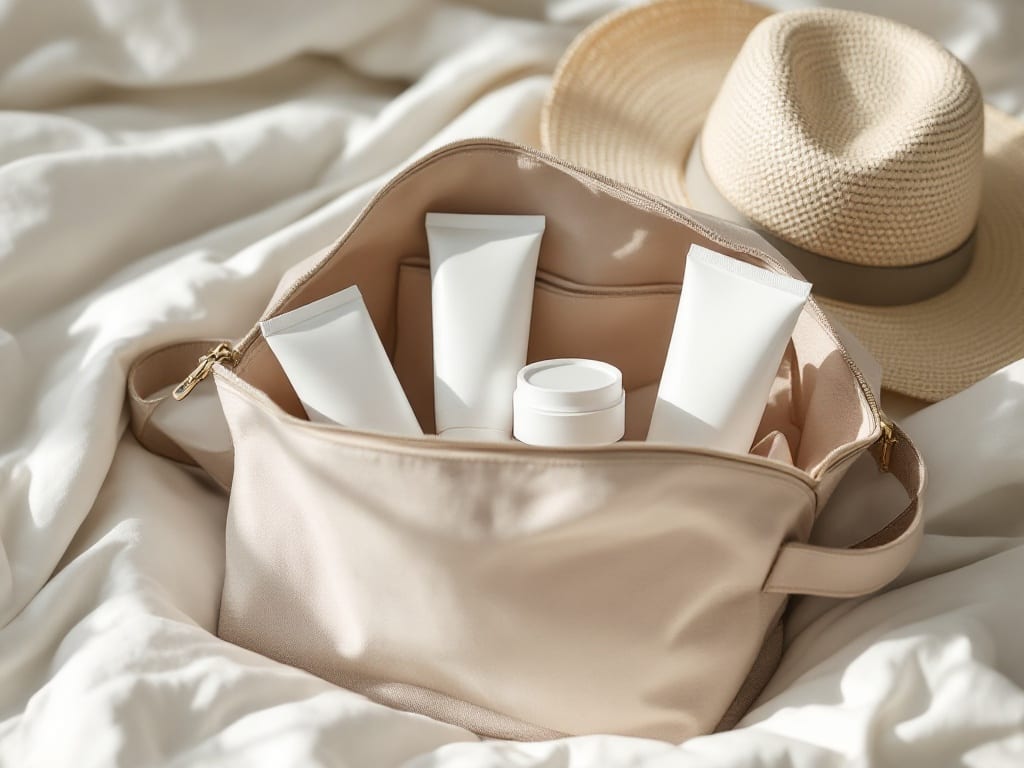
Travel is a trigger stack. A single trip can combine sun, heat, alcohol, stress, broken sleep, unfamiliar water, and a toiletry bag improvised at the last minute, which is why so many people with rosacea come home from a good vacation with a bad face. None of that argues for staying home. It argues for treating your skin like anything else you pack deliberately.
The flight is drier than almost anywhere you live. Cabin air at cruising altitude typically sits well below 20 percent relative humidity, drier than most deserts, and a few hours of it quietly pulls water out of an already fragile barrier. The fix is unglamorous: moisturize before you board and again mid-flight on longer legs, carry a travel-size tube of your usual barrier cream rather than sampling whatever the seat pocket offers, drink water, and go easy on the in-flight wine and coffee, both of which show up in our reporting on alcohol and rosacea. Skin that lands hydrated recovers from the rest of the trip far faster.
Sun is the trigger most worth planning around. Sunlight is the most commonly reported rosacea trigger in patient surveys, and vacations tend to multiply exposure: beaches, walking tours, long lunches outside. Pack the mineral sunscreen you already know your skin tolerates, because hunting for a zinc formula in a resort gift shop rarely ends well; our guide to the best sunscreen for rosacea explains what to look for. Add a wide-brim hat and a preference for shade in the peak hours and you have removed the single largest variable. The American Academy of Dermatology's sun-protection guidance at aad.org applies doubly to reactive skin.
Heat management is the other half. Hot climates, saunas, hot springs, and even an over-enthusiastic hotel shower all provoke the same vascular response. You do not have to skip the experiences; you have to buffer them. Rinse with lukewarm water, keep something cool nearby, and use the tricks from our guide to calming a rosacea flare: a cold drink held near the face, a damp cloth from the ice bucket, a few minutes of air conditioning before you head back out. Small interruptions of a flush genuinely shorten it.
Pack your routine, not a new one. A trip is the worst possible time to trial products. Bring travel sizes of your proven cleanser, moisturizer, and sunscreen, and every prescription you use, in your carry-on rather than checked luggage. Hotel toiletries are formulated for fragrance, not for reactive skin, and tend to be loaded with exactly the ingredients we flag in skincare ingredients to avoid with rosacea. If you use a prescription topical, keep the schedule; a week off ivermectin or azelaic acid is how a quiet month unravels.
Finally, give yourself margin. Jet lag, dehydration, and the low-grade stress of transit are all flare fuel, and the difference between a trip that wrecks your skin and one that does not is usually a handful of small accommodations: water, shade, sleep, and the ten seconds it takes to reapply sunscreen. Rosacea travels fine when it is on the packing list.
Related reading: Best sunscreen for rosacea and How to calm a rosacea flare.