
Field Notes · May 20, 2026 · 5 min · By Pascal Winterhalter
Spicy food and rosacea: the heat and capsaicin flush
Hot, spicy meals trigger flushing through both temperature and capsaicin.
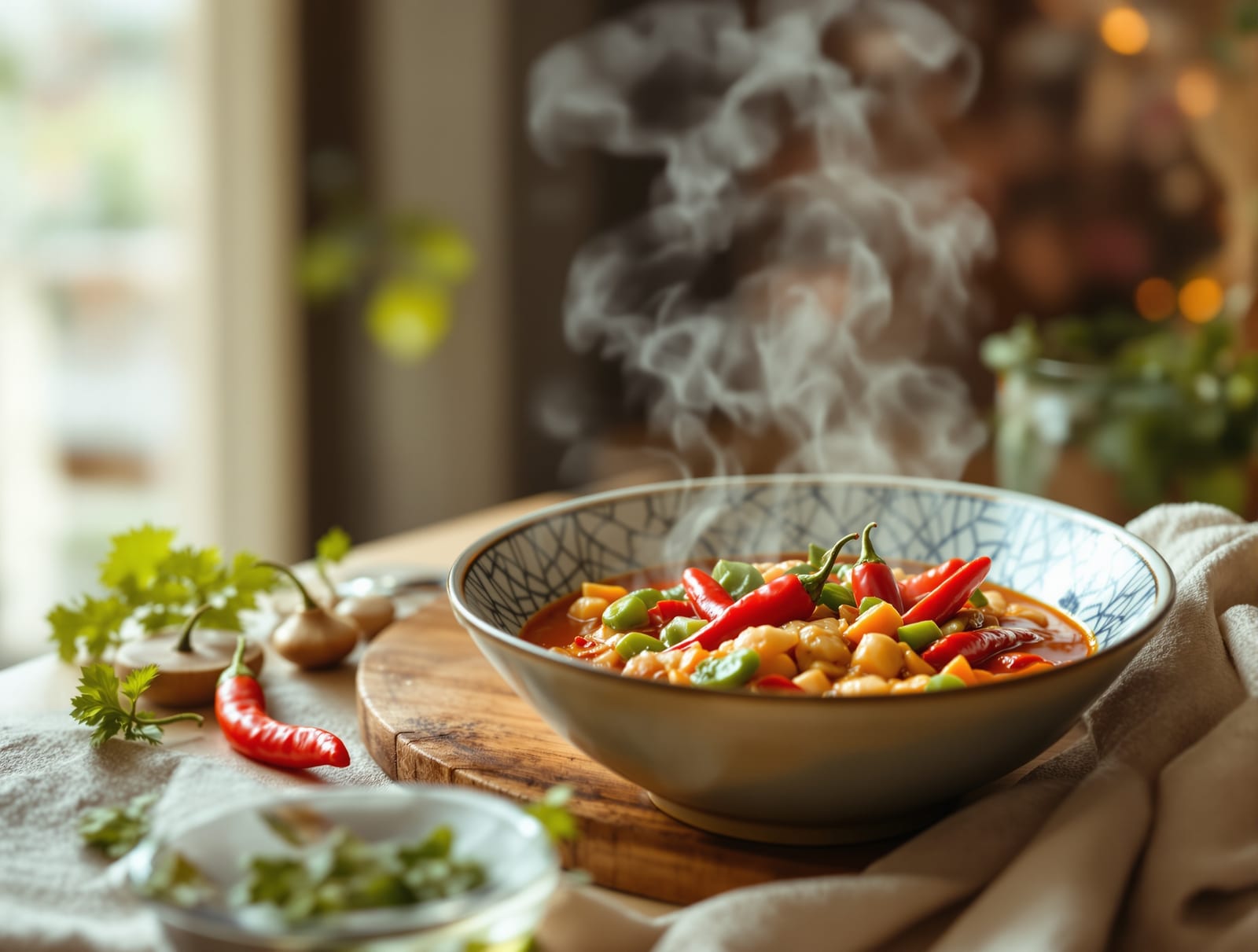
Spicy food sits high on most rosacea trigger lists, and it is a double trigger: the physical heat of a hot meal plus the capsaicin that makes chilies feel hot both push the face toward a flush.
Why spicy food flushes the face
Capsaicin, the compound in chili peppers, activates heat-sensing receptors in the skin and triggers vessel dilation and a sensation of warmth, even though no actual burn occurs. Combine that with the genuine heat of a steaming dish, and rosacea-prone vessels, which over-dilate and recover slowly, produce a visible flush. The National Rosacea Society regularly finds spicy foods and hot beverages among the top dietary triggers, and research on dietary triggers is collected on PubMed.
Heat may matter as much as spice
It is worth separating the two. Sometimes it is the temperature of the food or drink, not the spice, that does it, which is why a piping-hot coffee can flush someone who tolerates mild chili just fine. Letting hot food and drinks cool a little before consuming is a simple, underused fix. The American Academy of Dermatology lists both hot and spicy foods among common triggers.
A measured approach
You do not have to eat bland food forever. Use a trigger diary to learn how much spice and heat you personally tolerate, since this varies widely. Many people find a threshold they can live within rather than total avoidance. Pairing sensible dietary awareness with your overall medical plan keeps a single spicy meal from becoming a multi-day flare.
The takeaway
Spicy, hot food triggers rosacea through both capsaicin and temperature. Let hot dishes cool, learn your personal spice tolerance with a trigger diary, and treat the underlying redness so the occasional indulgence settles quickly rather than lingering.
Related reading: Alcohol and rosacea.