
Skincare · July 1, 2026 · 5 min · By Silas Obafemi
Hard water, hot water, and rosacea: a hidden trigger at the tap
Water temperature is one of the highest-yield changes you can make. Hardness matters too.
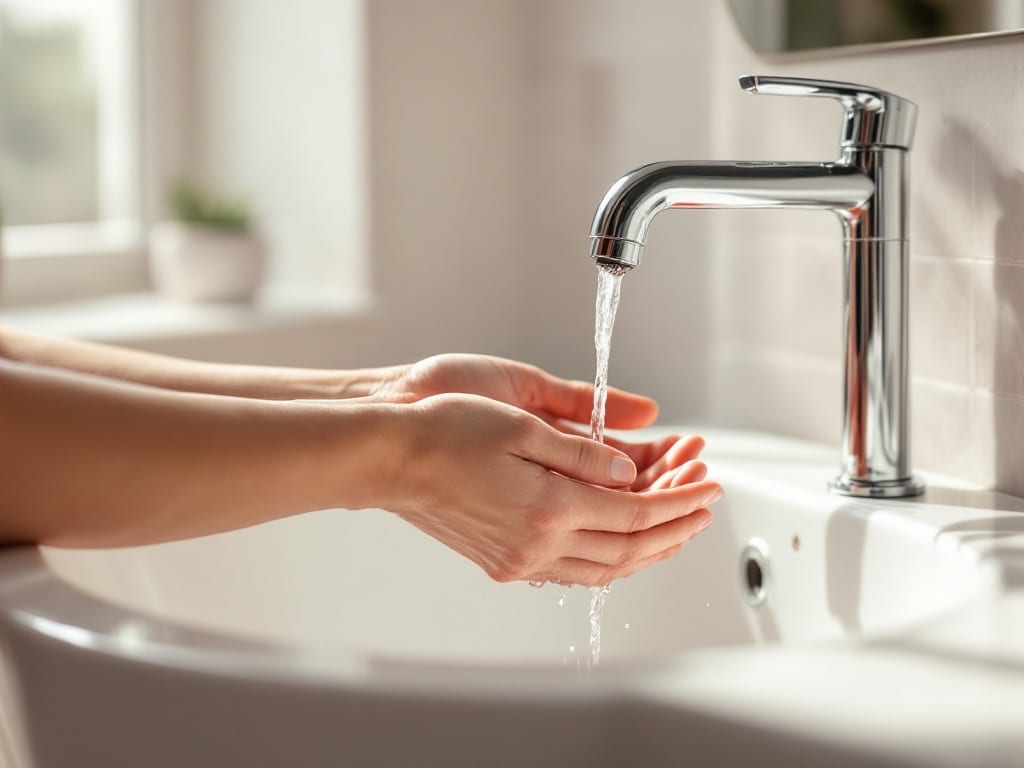
Two things about water get blamed for rosacea flares more than almost anything else in the bathroom: how hot it is, and how hard it is. Both complaints have some basis, and both are easy to act on without spending much.
Temperature is the clearer trigger. Heat is one of the most reliable rosacea provocations, and hot water on the face causes a rapid flush and can leave skin red long after you towel off. Lukewarm water is the simple fix. Wash and rinse at a temperature that feels barely warm, skip the steaming shower on your face, and pat rather than rub dry. For an independent overview, see Rosacea triggers: how to find and avoid yours.
Hard water, meaning water high in dissolved calcium and magnesium, is a softer story. It interacts poorly with foaming cleansers, leaving a mineral and surfactant residue that can disrupt an already fragile barrier and leave skin feeling tight and irritated. The research linking hard water to eczema is stronger than it is for rosacea, but the barrier logic carries over: anything that strips or stresses the barrier tends to make reactive skin worse.
The practical moves are cheap. Use a gentle, low-foaming or non-foaming cleanser, rinse thoroughly with lukewarm water, and immediately seal in moisture while the skin is still damp. If your water is very hard, a rinse with filtered or distilled water, or a shower head filter, is a low-risk experiment worth a few weeks. These small water habits fold neatly into a calm daily plan, which we lay out in our rosacea skincare routine.
None of this replaces treatment, but water temperature in particular is one of the highest-yield changes a person with rosacea can make, and it costs nothing.