
Explainer · July 25, 2026 · 5 min · By Nolan Achterman
Rebound Redness Explained: Why Brimonidine and Oxymetazoline Sometimes Backfire
Topical vasoconstrictors can erase rosacea redness within an hour, yet a subset of users report worse flushing than before. Here is the pharmacology behind the paradox and how clinicians work around it.
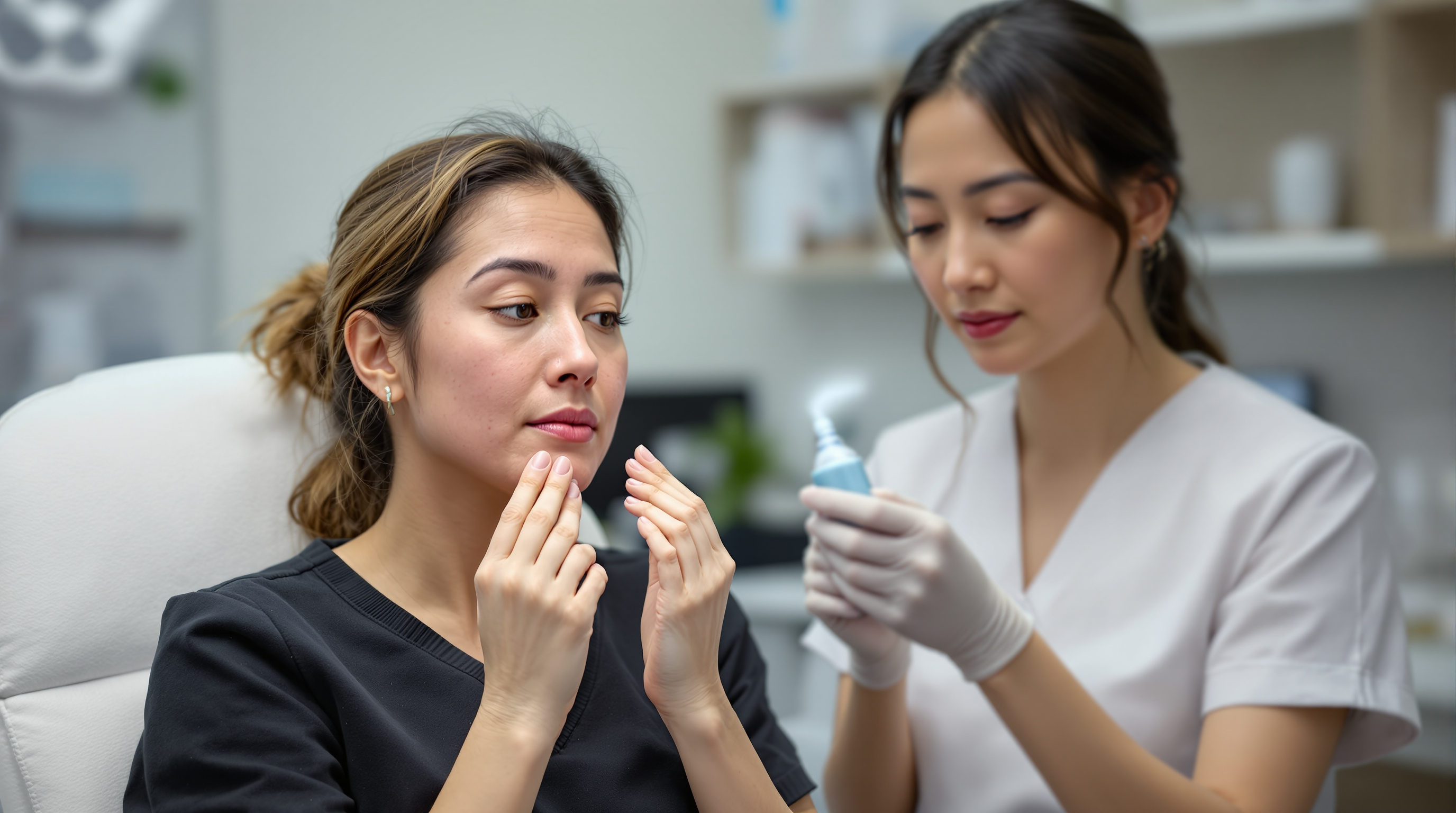
Two prescription gels and creams promise something no other rosacea therapy can: visible redness reduction within 30 to 60 minutes. Brimonidine 0.33% gel and oxymetazoline 1% cream both work by constricting the dilated facial blood vessels that give persistent erythema its color. For many patients they perform exactly as advertised. For a smaller group, the products trigger redness that is deeper, more diffuse, or longer lasting than the baseline problem. That reaction has a name, rebound erythema, and understanding why it happens makes the drugs far easier to use safely.
How the drugs work in the first place
Both medications are alpha adrenergic agonists, meaning they activate receptors on the smooth muscle wrapped around small blood vessels in the skin. When those receptors fire, the muscle contracts, the vessel narrows, and less blood flows near the surface. Less blood near the surface means less visible red. Brimonidine acts mainly on alpha 2 receptors, while oxymetazoline is a mixed alpha 1A and partial alpha 2 agonist. The distinction matters, and we will come back to it.
Neither drug treats the underlying disease. Rosacea's persistent erythema reflects chronically dilated, structurally remodeled vessels along with neurovascular dysregulation. Vasoconstrictors are cosmetic in effect, comparable to how a decongestant shrinks nasal vessels without curing a cold. When the drug wears off, typically after 8 to 12 hours, the vessels return to their dilated baseline.
Why rebound happens
The leading explanation involves receptor adaptation. Vascular smooth muscle exposed to a strong agonist for hours responds by downregulating or desensitizing its alpha receptors. When the drug clears, the vessel is temporarily less responsive to the body's own norepinephrine, the natural vasoconstrictor that maintains resting vascular tone. The result is dilation beyond baseline, experienced by the patient as a flare that can feel worse than untreated rosacea. This is the same mechanism behind rhinitis medicamentosa, the rebound congestion caused by overusing nasal decongestant sprays, which is not a coincidence since oxymetazoline is the active ingredient in many of them.
A second contributor is unmasking. Some patients have low grade inflammation or telangiectasia that the vasoconstrictor hides during the day. When the effect fades in the evening, the redness reappears and can be misread as rebound when it is simply the return of baseline.
A third factor is paradoxical vasodilation at low drug concentrations. As brimonidine is absorbed and its local concentration falls, alpha 2 receptors on the vessel lining, the endothelium, can trigger release of nitric oxide, a vasodilator. This may explain why some brimonidine users report a redness surge three to six hours after application, before the drug has fully worn off, rather than only at the end of the dosing window.
Do the two drugs differ?
In clinical trial data and post marketing reports, rebound and worsening erythema have been described more often with brimonidine than with oxymetazoline. Pharmacologists point to the receptor profile as a plausible reason. Alpha 1A receptors, oxymetazoline's primary target, sit mostly on smooth muscle and drive straightforward constriction. Alpha 2 receptors are present on both smooth muscle and endothelium, which creates the dual potential for constriction and nitric oxide mediated dilation described above. That said, rebound has been reported with both agents, and head to head comparative trials are limited, so no one should treat oxymetazoline as rebound proof.
Reported rates vary widely, roughly 5 to 20% of brimonidine users experiencing some form of worsened redness in studies and real world series. Fair skinned patients with prominent flushing, as opposed to fixed background erythema, appear more susceptible, though predictive data remain thin.
Practical strategies clinicians use
Several habits reduce the risk. First, dose small: a pea sized amount for the entire face is the labeled quantity, and applying more increases both intensity of constriction and the depth of the subsequent rebound. Second, avoid application to irritated, freshly exfoliated, or retinoid treated skin, where absorption is higher. Third, some prescribers suggest intermittent use, reserving the product for event days rather than daily application, which limits receptor adaptation. Fourth, patients are often advised to trial the product on a low stakes day, not before a wedding, so an adverse response is discovered privately.
If rebound occurs, the standard advice is to stop the drug rather than chase the redness with more product, since reapplication deepens the receptor desensitization cycle. Cool compresses, bland moisturizer, and time usually resolve the flare within a day or two.
The bottom line
Rebound erythema is not an allergy and not a mystery. It is predictable pharmacology: push a vessel hard in one direction and its regulatory machinery pushes back. These drugs remain genuinely useful for patients who understand what they do, temporary camouflage of redness rather than disease modification, and who use them conservatively. Anyone with rosacea considering a topical vasoconstrictor should discuss dosing strategy and rebound risk with a prescriber, and pair the drug with therapies that address the underlying inflammation, such as azelaic acid, ivermectin, or vascular laser treatment, rather than relying on constriction alone.
Related reading: Oxymetazoline for facial redness: what it does and does not do.
Further reading: Dermatitis medicamentosa: severe rebound erythema secondary to topical brimonidine in rosacea (Dermatol Online J 2015); Topical brimonidine for the management of facial erythema in rosacea: a histological, histometric, and immunohistochemical study (Int J Dermatol 2023); Optimizing the use of topical brimonidine in rosacea management: panel recommendations (J Drugs Dermatol 2015).
Keep reading
Low-dose isotretinoin for rosacea: the option when topicals and doxycycline fall short
Read nextMore in Explainer
View all →- Ivermectin Cream and the Demodex Question: What the Mechanism Actually Tells Us
- Brimonidine vs. Oxymetazoline: What Topical Redness Reducers Actually Do, and Why Rebound Happens
- Why 40 Milligrams of Doxycycline Can Beat 100: The Case for Anti-Inflammatory Dosing in Rosacea
- Why 40 Milligrams of Doxycycline Can Calm Rosacea When Higher Doses Are Not Needed