
Treatment · July 3, 2026 · 4 min · By Oriana Sandoval
Rosacea treatment during pregnancy and breastfeeding: what is safe
Several standard rosacea medications are paused for these months, but the condition stays manageable.
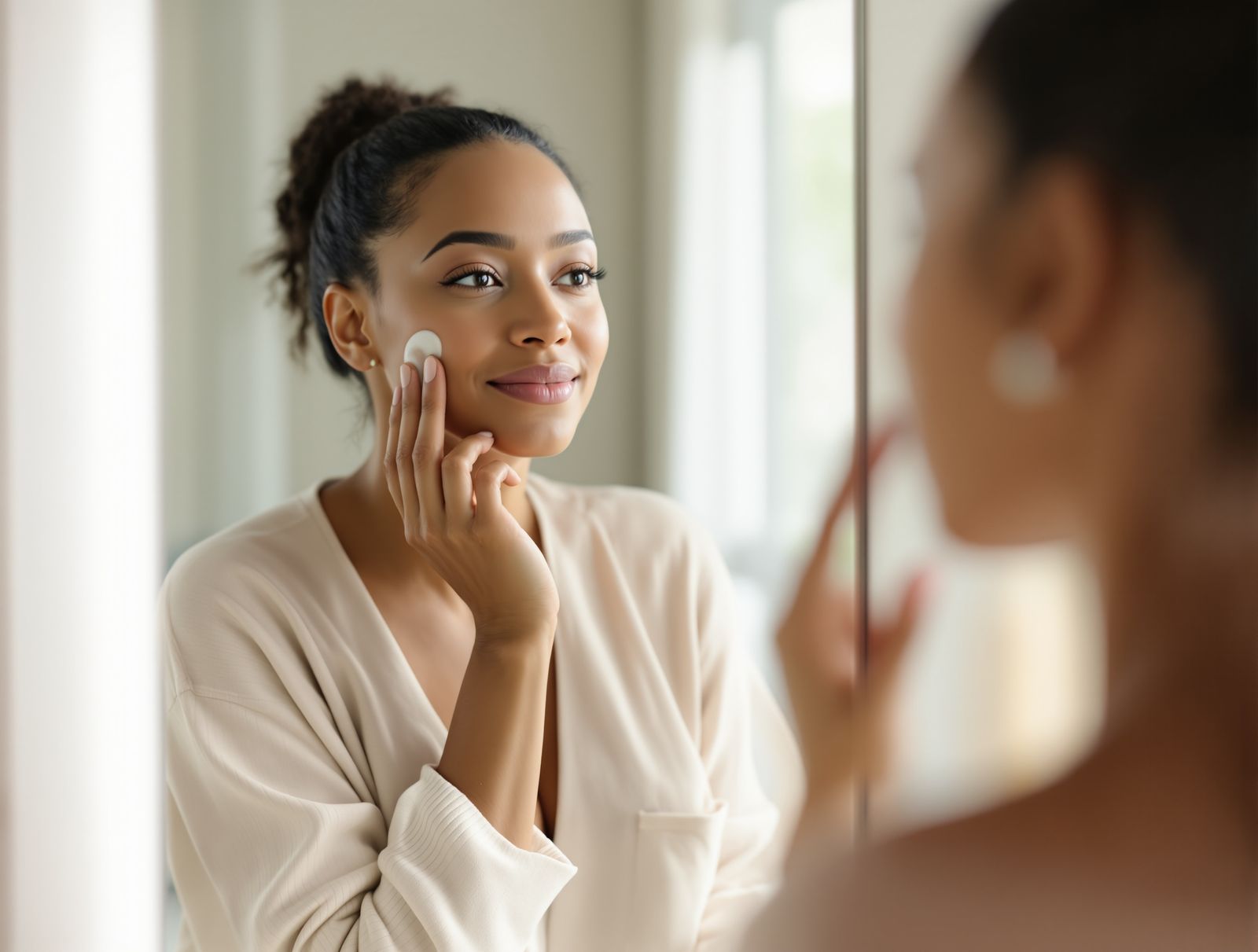
Rosacea does not pause for pregnancy. For some women it flares, for others it quiets down, but either way the treatment plan has to change, because several standard rosacea medications are avoided during pregnancy and breastfeeding. Knowing which options are considered reasonable and which come off the table helps you keep your skin calm without second-guessing every product. None of this replaces a conversation with your obstetrician and dermatologist, who should sign off on anything you use while pregnant or nursing.
Why pregnancy changes the plan
Pregnancy shifts the calculation behind every treatment. A medication that is a straightforward choice at other times may have limited safety data in pregnancy, and the default in that situation is caution. Two things drive the decisions: how much of a drug is absorbed into the bloodstream, and what the evidence says about risk to the developing baby. Topicals that stay mostly on the skin are generally viewed more favorably than oral drugs that circulate through the whole body, though even topicals are weighed individually. Hormonal changes can also alter the skin itself, so the rosacea you are managing may behave differently than usual. Mayo Clinic emphasizes gentle, consistent care as the backbone of treatment, and that backbone becomes even more central when the medication list narrows.
Treatments generally considered reasonable
For the inflammatory bumps of rosacea, azelaic acid is often regarded as one of the more reasonable prescription options during pregnancy, and it happens to be a gentle multitasker that addresses both bumps and redness. Our guide to azelaic acid for rosacea covers how it is used. Topical metronidazole is also commonly discussed as a low-absorption option, though as with everything here the decision rests with your clinicians. The foundation of care, the part that carries essentially no medication risk, is gentle skin care itself: a fragrance-free cleanser, a barrier-repairing moisturizer, and diligent daily sun protection. Because sun is among the most common rosacea triggers, a well-chosen mineral sunscreen is one of the safest and highest-return habits during pregnancy, and it doubles as protection against the pregnancy-related pigmentation known as melasma. A zinc oxide or titanium dioxide formula that is fragrance-free tends to be the most tolerable choice. The American Academy of Dermatology frames this kind of gentle, sun-smart care as the base that any prescription builds on. When you do start something new, introduce one product at a time and patch test it first, so that if your skin reacts you know exactly what caused it rather than having to abandon your whole routine.
What is usually avoided
Some rosacea treatments are clearly set aside in pregnancy. Oral tetracycline antibiotics, including the low-dose doxycycline sometimes used for stubborn inflammation, are not used because they can affect fetal bone growth and stain developing teeth. Retinoids are the other well-known category to avoid: oral retinoids are strongly linked to birth defects, and even topical retinoids are generally paused during pregnancy as a precaution, which is why the retinoid you may have used before is one to stop. Topical ivermectin and the vessel-constricting creams brimonidine and oxymetazoline have limited pregnancy safety data, so many clinicians hold them rather than assume they are fine. The theme is consistency: when the evidence is thin, the safe move is to wait. Research on rosacea and pregnancy is collected on PubMed.
Managing flushing without more medication
Because the medication toolbox is smaller, trigger control does more of the work during pregnancy. The usual provocations, heat, sun, spicy food, stress, and hot drinks, still apply, and avoiding your personal ones lowers flare frequency without any risk at all. Keep the routine simple and barrier-focused, and lean on cooling and simplification when a flare hits rather than reaching for stronger products. Practical moves cost nothing and carry no risk: dress in layers you can shed, keep rooms comfortable rather than hot, let hot drinks cool before sipping, and use a cool damp cloth on the face when a flush builds. Sleep and stress management help too, since stress is a common flare driver and pregnancy brings plenty of it. Light-based treatments such as laser and intense pulsed light are often considered low risk, but many practitioners prefer to defer elective procedures until after delivery, so this is a per-person conversation rather than an automatic yes.
Breastfeeding, briefly
The same caution extends into breastfeeding, though the specifics differ. Some treatments that are avoided in pregnancy may be reconsidered while nursing, and others stay off the list. Topicals applied away from the chest and areola are generally viewed more favorably than oral medication. As in pregnancy, the right answer comes from your dermatologist and the professional caring for your baby, not from a product label alone.
The takeaway
During pregnancy and breastfeeding, rosacea care leans on the safest tools: gentle barrier care, mineral sunscreen, and trigger control, with azelaic acid and topical metronidazole often discussed as reasonable prescription options. Oral tetracyclines and retinoids are avoided, and several other treatments are paused for lack of data. The condition stays very manageable through this period, but every medication decision should be made with your obstetrician and dermatologist. For most people this is a temporary adjustment, and the fuller plan resumes after delivery.
Related reading: Low-dose doxycycline for rosacea.
More in Treatment
View all →- Low-dose isotretinoin for rosacea: the option when topicals and doxycycline fall short
- Beta-Blockers for Rosacea Flushing: When Creams Are Not Enough for the Flush
- Brimonidine (Mirvaso) for Rosacea Redness: What It Does and the Rebound to Watch For
- Sulfur and sodium sulfacetamide for rosacea: the older topicals that still earn a place