
Treatment · May 18, 2026 · 7 min · By Oriana Sandoval
IPL vs pulsed dye laser for rosacea redness: how to choose
Two leading light-based options for redness and vessels, compared.
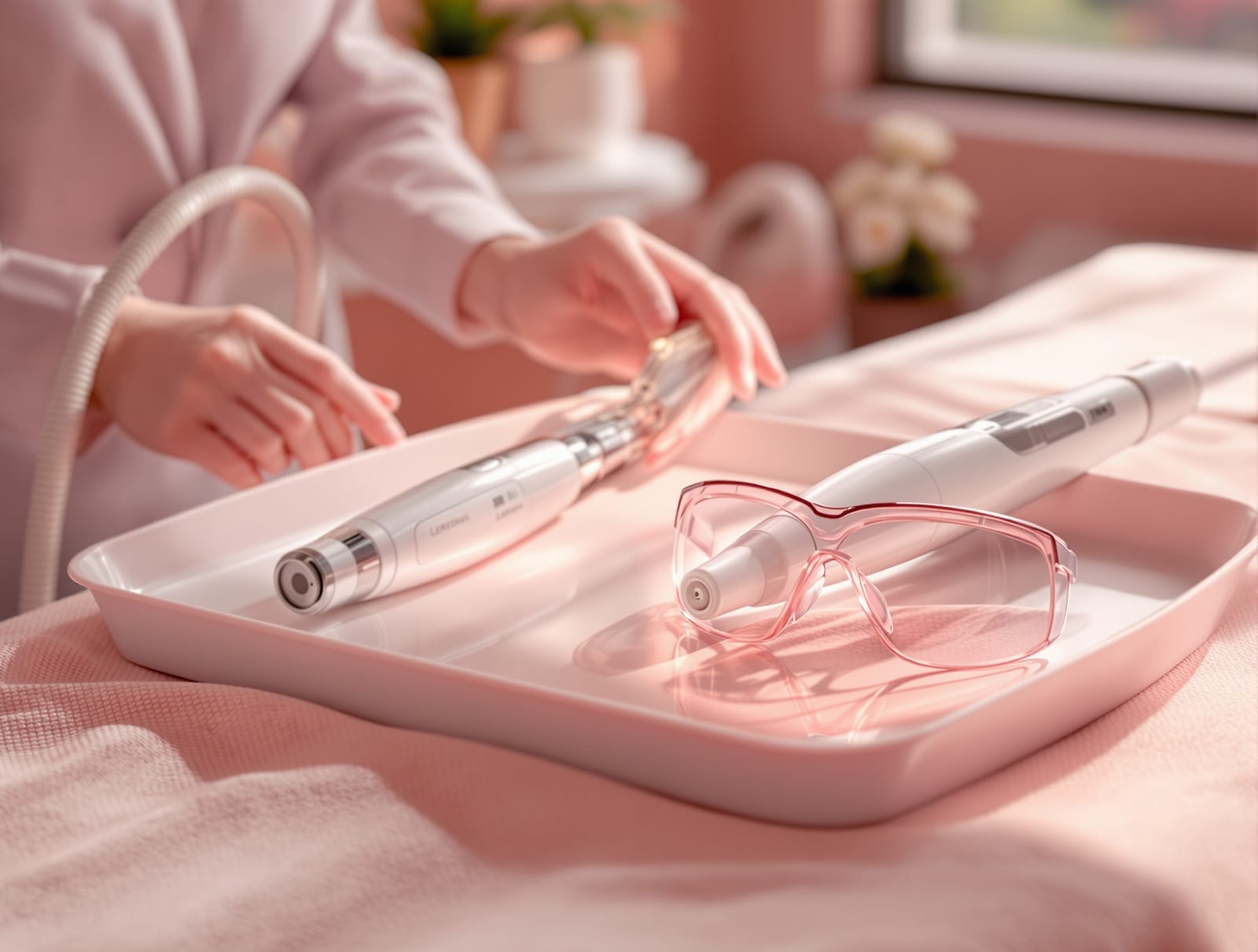
When persistent redness and visible vessels do not respond to creams, light-based treatment is the durable answer, and the two names you will hear most are IPL and pulsed dye laser. They overlap, but they are not identical.
The shared principle
Both work by targeting hemoglobin in the dilated blood vessels driving the redness. The light is absorbed, heats and collapses the vessel, and the body clears it. Over a series of sessions, both reduce diffuse redness and individual visible vessels, as covered in our overview of laser and light for facial redness. The American Academy of Dermatology recognizes both for the vascular features of rosacea.
Intense pulsed light, IPL
IPL is not a true laser but a broadband flash of light across many wavelengths. That breadth lets it treat diffuse background redness and brown sun-related pigment at the same time, which makes it a strong choice when redness is widespread and the skin also has sun damage. It typically involves a series of sessions with minimal downtime.
Pulsed dye laser, PDL
PDL emits a single wavelength tuned tightly to blood vessels, which makes it especially effective for distinct visible vessels and more intense redness. Depending on settings, it can cause temporary bruising, called purpura, though gentler settings reduce this. Many clinicians favor PDL for prominent telangiectasia. Comparative studies of PDL and IPL for rosacea erythema are indexed on PubMed.
How to choose
The honest answer is that it depends on your skin and a clinician's judgment, not a universal winner. Broad diffuse redness with sun damage often points to IPL; discrete prominent vessels often point to PDL; many practices use both, sometimes in combination. Skin tone, the device available, and operator experience all matter, and the American Society for Dermatologic Surgery recommends a clinician experienced with vascular treatments. A consultation with a dermatologist who owns more than one device will give you the most honest recommendation.
What both require
Either way, expect a planned series rather than one visit, results that build over sessions, and periodic maintenance, because rosacea's underlying tendency persists. Sun protection between and after sessions is essential.
The takeaway
IPL and pulsed dye laser both durably reduce rosacea redness and vessels by targeting blood vessels. IPL suits broad redness and sun damage; PDL suits discrete vessels and intense redness. The right pick depends on your skin and an experienced clinician, not the brand name.
Related reading: BBL and broadband light for rosacea.
More in Treatment
View all →- Low-dose isotretinoin for rosacea: the option when topicals and doxycycline fall short
- Beta-Blockers for Rosacea Flushing: When Creams Are Not Enough for the Flush
- Brimonidine (Mirvaso) for Rosacea Redness: What It Does and the Rebound to Watch For
- Sulfur and sodium sulfacetamide for rosacea: the older topicals that still earn a place