
Explainer · April 24, 2026 · 7 min · By Nolan Achterman
Papulopustular rosacea: when it looks like adult acne
Inflamed bumps and pustules without blackheads, on a red central face.
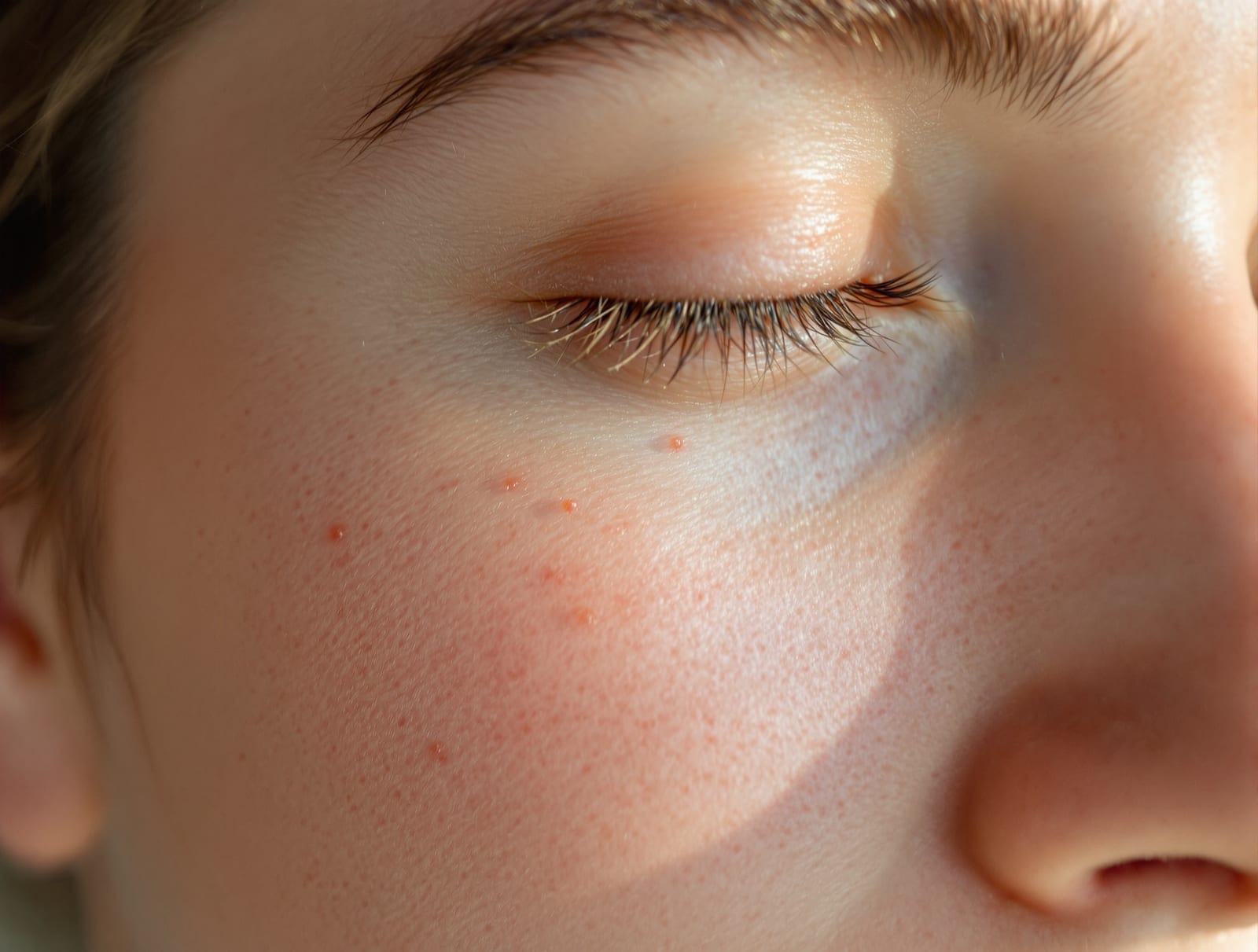
Papulopustular rosacea is the subtype most often mistaken for adult acne, and that confusion leads to a lot of well-meant but counterproductive treatment.
What it looks like
The picture is inflamed red bumps, called papules, and pus-filled spots, called pustules, scattered across the central face on a background of redness. Crucially, there are no blackheads or whiteheads, the comedones that define true acne. The skin is often sensitive and may sting. It tends to appear in adulthood, frequently in people who also flush easily, which links it to the vascular subtype. The American Academy of Dermatology describes this presentation in its overview of the condition.
Why it is not acne
The biology differs. Acne is driven by oil, clogged pores, and the bacteria that thrive in them. Papulopustular rosacea is driven by inflammation, an overactive immune response, and, in many cases, a proliferation of Demodex mites and the bacteria they carry. Treating it like acne, with harsh scrubs, strong acids, and benzoyl peroxide, strips the already-fragile barrier and usually makes it worse. Telling the two apart, along with seborrheic dermatitis, is the subject of our guide on reading facial redness.
How it is treated
This is the subtype with the most prescription options. Topicals include metronidazole, azelaic acid, and ivermectin. For more widespread or stubborn cases, low-dose oral doxycycline is used for its anti-inflammatory effect. Clinical reviews of these therapies are indexed on PubMed, and Mayo Clinic summarizes the standard approach. All of it works better on top of a gentle routine and sun protection.
What to expect
The bumps usually settle over several weeks of consistent treatment, then need maintenance to stay quiet, since rosacea returns when therapy stops. Any leftover background redness or vessels are treated separately with laser or light, because topicals and orals do not erase vessels.
The takeaway
If you have adult bumps and pustules without blackheads on a red central face, think rosacea, not acne, and resist the urge to attack it with aggressive acne products. Anti-inflammatory topicals, sometimes a low-dose oral, and gentle skin care are what calm this subtype.
Related reading: The four types of rosacea.
More in Explainer
View all →- Ivermectin Cream and the Demodex Question: What the Mechanism Actually Tells Us
- Brimonidine vs. Oxymetazoline: What Topical Redness Reducers Actually Do, and Why Rebound Happens
- Why 40 Milligrams of Doxycycline Can Beat 100: The Case for Anti-Inflammatory Dosing in Rosacea
- Rebound Redness Explained: Why Brimonidine and Oxymetazoline Sometimes Backfire