
Explainer · April 14, 2026 · 7 min · By Nolan Achterman
Erythematotelangiectatic rosacea: the flushing and redness subtype
Persistent central redness and visible vessels, the most common pattern.
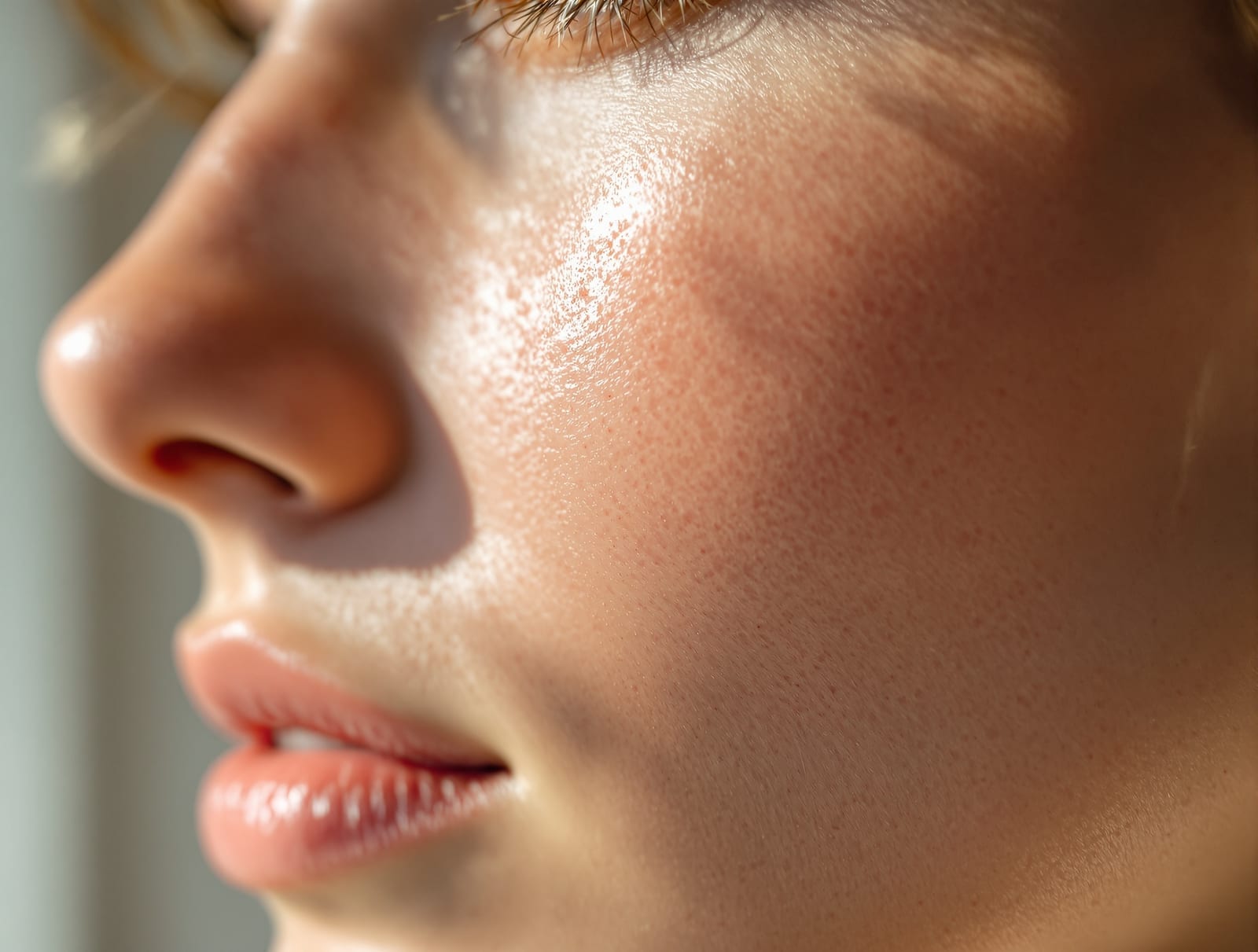
If your rosacea shows up mainly as a red face that flushes easily, you most likely have the erythematotelangiectatic subtype, the flushing-and-redness pattern that is the most common way rosacea presents.
What it looks like
The hallmark is persistent redness across the central face, the cheeks, nose, chin, and forehead, sitting on skin that flushes quickly and stays flushed longer than it should. Over months and years, fine broken vessels, called telangiectasia, become visible, especially around the nose and cheeks. The skin often stings or burns, feels tight, and reacts to products other people tolerate without a thought. Bumps and pustules are minimal or absent, which is what separates this subtype from the papulopustular form.
Why it happens
The redness is vascular. The small blood vessels of the face dilate too easily and are slow to constrict again, so blood pools near the surface and the skin reads as red. Researchers link this to a combination of an overactive innate immune response, neurovascular dysregulation, and inflammation, summarized well in the StatPearls rosacea review. It is not caused by poor hygiene, and scrubbing makes it worse rather than better.
How it is treated
Treatment runs on two tracks. The first calms the flushing tendency: rigorous trigger control, daily sun protection, and a gentle routine, plus prescription options such as topical brimonidine or oxymetazoline that temporarily constrict the vessels. The second track addresses the visible vessels and background redness directly, and for that the durable answer is vascular laser or intense pulsed light, which collapse the dilated vessels so the body clears them. Topicals do little for established broken vessels, which is the most common source of frustration with this subtype. The American Academy of Dermatology outlines both medical and light-based options.
What to expect
This subtype is manageable but persistent. Lasers reduce visible vessels and diffuse redness substantially, often over three or more sessions, and periodic maintenance keeps results steady because the underlying tendency does not disappear. Pairing that with trigger control and barrier care is what keeps the face calm between treatments. The National Rosacea Society is a useful patient reference for tracking how the condition evolves over time.
The takeaway
If your main complaint is a constantly red, flush-prone face rather than bumps, you are dealing with erythematotelangiectatic rosacea, and the care that works for it is different from acne-style treatment. Sun protection, trigger control, and vascular laser, not harsh actives, are what move it. A dermatologist who treats a lot of rosacea can confirm the subtype and build the plan around it.
Related reading: The four types of rosacea.
Keep reading
Advances in rosacea treatment
Read nextMore in Explainer
View all →- Ivermectin Cream and the Demodex Question: What the Mechanism Actually Tells Us
- Brimonidine vs. Oxymetazoline: What Topical Redness Reducers Actually Do, and Why Rebound Happens
- Why 40 Milligrams of Doxycycline Can Beat 100: The Case for Anti-Inflammatory Dosing in Rosacea
- Rebound Redness Explained: Why Brimonidine and Oxymetazoline Sometimes Backfire