
Explainer · July 30, 2026 · 5 min · By Nolan Achterman
Metronidazole, Azelaic Acid, or Ivermectin: How the Three Workhorse Topicals for Rosacea Actually Compare
All three are first-line options for papulopustular rosacea, but they work through different mechanisms and suit different patients. Here is what the evidence says about choosing among them.
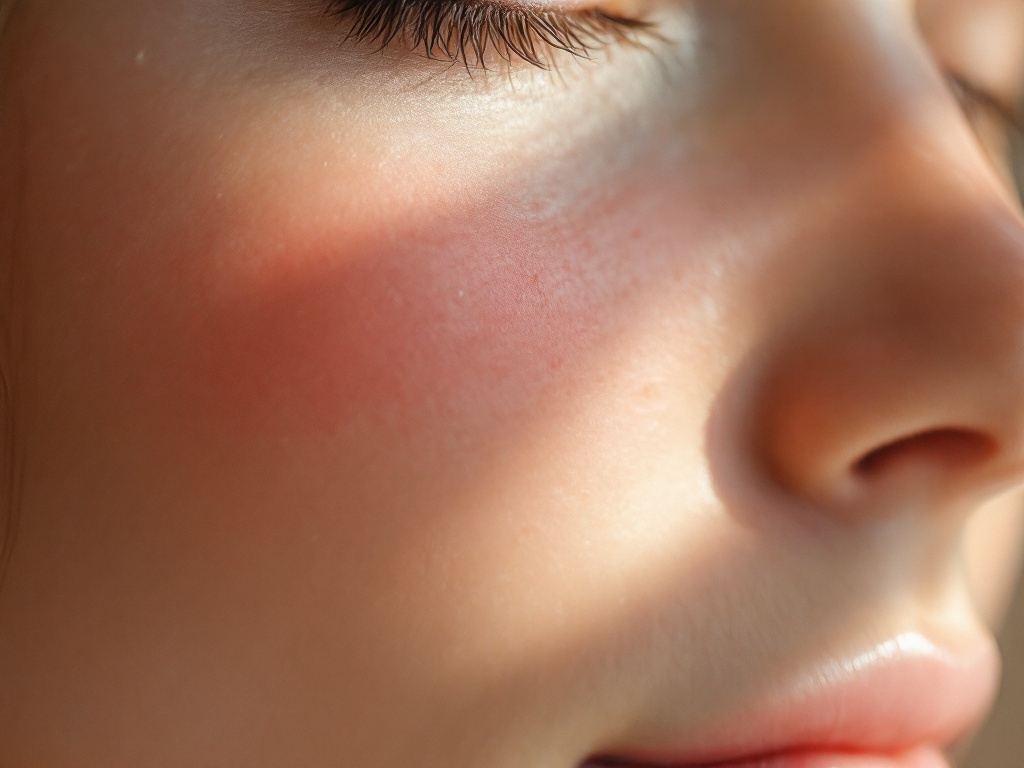
Ask three dermatologists which topical they reach for first in papulopustular rosacea and you may get three different answers. Metronidazole, azelaic acid, and ivermectin are all guideline-endorsed, all backed by randomized trials, and all reasonably well tolerated. Yet they are not interchangeable. Understanding what each one actually does in the skin makes the choice less arbitrary.
What each drug is doing For an independent overview, see Rosacea treatment: topical and oral options.
Topical metronidazole, available in 0.75 and 1 percent formulations, is technically an antibiotic, but its benefit in rosacea almost certainly does not come from killing bacteria. At the concentrations achieved in skin, it acts primarily as an anti-inflammatory and antioxidant agent, reducing reactive oxygen species generated by neutrophils. That matters because oxidative stress is one of the drivers of the inflammatory cascade in rosacea-prone skin.
Azelaic acid, used at 15 percent in gel or foam, is a dicarboxylic acid with several relevant actions. It downregulates kallikrein 5, the enzyme that converts cathelicidin into LL-37, an antimicrobial peptide found at elevated levels in rosacea skin and strongly implicated in its inflammation and vascular changes. It also has mild anti-keratinizing and antioxidant effects. In short, azelaic acid targets a step in the disease pathway that is fairly specific to rosacea biology.
Ivermectin 1 percent cream works on two fronts. It is an antiparasitic that reduces the density of Demodex mites, which colonize facial skin at higher rates in many rosacea patients and appear to trigger innate immune activation. It also has direct anti-inflammatory properties, suppressing inflammatory cytokine production independent of any effect on mites. Which of these two actions matters more is still debated, but the combination is likely why it performs well in trials.
What head-to-head data show
The most cited direct comparison is a large randomized trial comparing ivermectin 1 percent once daily against metronidazole 0.75 percent twice daily over 16 weeks in moderate to severe papulopustular rosacea. Ivermectin produced a greater reduction in inflammatory lesion counts, roughly 83 percent versus 74 percent, and a higher rate of clear or almost clear skin. Follow-up data also suggested longer remission after stopping ivermectin, with a median time to relapse several weeks longer than after metronidazole.
Azelaic acid versus metronidazole is closer to a draw. Some trials found azelaic acid 15 percent slightly superior for lesion reduction and erythema, others found equivalence. A reasonable summary: azelaic acid is at least as effective as metronidazole, possibly modestly better, at the cost of more application-site stinging.
Direct azelaic acid versus ivermectin trials are sparse, but network meta-analyses generally rank ivermectin at or near the top for papulopustular disease, with azelaic acid and metronidazole behind it. The differences are real but not dramatic, and individual response varies considerably.
Tolerability and practical differences
Metronidazole is usually the gentlest. Irritation is uncommon, which makes it a sensible default for highly reactive skin or as a first trial in someone new to prescription topicals. Its main limitations are twice-daily dosing for the 0.75 percent formulation and somewhat lower efficacy ceilings.
Azelaic acid frequently causes transient burning, tingling, or itch in the first weeks, affecting a substantial minority of users. This usually settles with continued use, but patients should be warned in advance or many will abandon it early. It has one distinct advantage: it can modestly improve background erythema and post-inflammatory pigmentation, and it has a long safety record in pregnancy, where it is often the preferred choice.
Ivermectin is once daily, generally well tolerated, and the strongest performer for inflammatory papules and pustules. It is the logical pick when Demodex involvement is suspected, for example in patients with prominent follicular scaling, ocular irritation, or disease that flared after topical steroids. It does not meaningfully address persistent background redness.
What none of them do well
All three drugs target the papules, pustules, and inflammatory component of rosacea. None of them reliably treats fixed background erythema or visible telangiectasias, which reflect structural vascular changes rather than active inflammation. Persistent redness responds better to alpha-adrenergic agonists such as brimonidine or oxymetazoline, or to vascular laser and light-based treatment. Setting that expectation upfront prevents the common frustration of a patient whose bumps clear while their flush remains.
A practical way to choose
For moderate to severe papulopustular disease, ivermectin has the best trial data and the most durable remissions. For mild disease, sensitive skin, or cost constraints, metronidazole remains entirely reasonable. For patients who are pregnant, planning pregnancy, or who have coexisting pigmentation concerns, azelaic acid is often the best fit. Whichever agent is chosen, give it a fair trial: meaningful improvement typically takes 4 to 8 weeks, with maximal benefit at 12 to 16 weeks. Switching or combining with an oral agent is appropriate if response is inadequate after that window, not before.
The larger point is that these are not generic anti-redness creams. Each intervenes at a different point in rosacea biology, and matching the mechanism to the patient is what separates a lucky prescription from a considered one.
Related reading: Metronidazole, Azelaic Acid, or Ivermectin: How the Three Workhorse Topicals for Rosacea Actually Compare.
More in Explainer
View all →- Ivermectin, Metronidazole, or Azelaic Acid: How the Three First-Line Topicals for Rosacea Actually Compare
- Ivermectin, Metronidazole, or Azelaic Acid: How the Three Big Topicals for Rosacea Actually Differ
- Ivermectin, Metronidazole, or Azelaic Acid: How the Three Big Topicals for Rosacea Actually Compare
- Azelaic Acid vs. Metronidazole: How the Two Workhorse Topicals Actually Compare