
Explainer · July 28, 2026 · 4 min · By Nolan Achterman
Ivermectin vs Metronidazole for Papulopustular Rosacea: What the Mechanisms Actually Tell Us
Both creams sit on pharmacy shelves and both carry regulatory approval, but they work through different biology. Here is a plain-English comparison of how each one acts, what head-to-head trials found, and how clinicians decide between them.
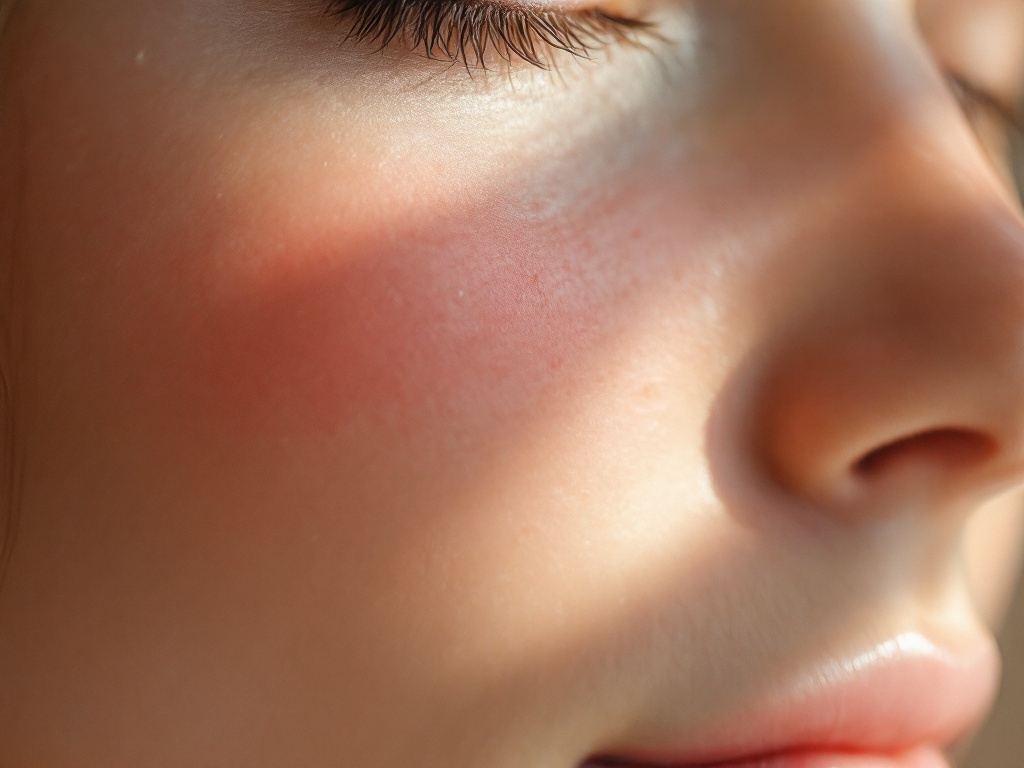
If you have papulopustular rosacea, the subtype marked by red bumps and pus-filled spots across the central face, your dermatologist will likely reach for one of two topical prescriptions first: metronidazole or ivermectin. Both are backed by decades of use or large randomized trials. Both are generally well tolerated. But they are not interchangeable, and understanding why comes down to what each drug actually does in the skin.
Metronidazole: the anti-inflammatory workhorse For an independent overview, see Papulopustular rosacea: bumps and pustules, treatment options.
Metronidazole is best known as an antibiotic and antiparasitic, but its benefit in rosacea almost certainly has little to do with killing microbes at the concentrations used on skin. Available as a 0.75 percent gel, cream, or lotion, and as a 1 percent formulation, it appears to work by reducing oxidative stress. Rosacea-prone skin generates elevated levels of reactive oxygen species, unstable molecules released by neutrophils that damage tissue and perpetuate inflammation. Metronidazole scavenges some of these species and dampens neutrophil activity, which translates clinically into fewer inflammatory lesions over 8 to 12 weeks of twice-daily or once-daily use.
Its strengths are predictability and tolerability. It has been prescribed since the late 1980s, it rarely stings on compromised skin barriers, and it is inexpensive in generic form. Its limitation is a ceiling effect: lesion reductions in trials typically land in the 50 to 65 percent range, and it does nothing to address one increasingly discussed contributor to rosacea, the Demodex mite.
Ivermectin: the mite-and-inflammation combination
Ivermectin 1 percent cream, approved in 2014 and applied once daily, brings a dual mechanism. First, it is acaricidal, meaning it kills Demodex folliculorum, a microscopic mite that lives in facial hair follicles. Everyone hosts some Demodex, but multiple studies have found mite densities several times higher in rosacea patients than in controls. The prevailing hypothesis is that mite fragments and their bacterial cargo trigger the skin's innate immune system, activating toll-like receptor 2 and driving production of cathelicidin peptides that fuel inflammation and vessel dilation. Reduce the mite load, the reasoning goes, and you remove a persistent immune trigger.
Second, ivermectin has direct anti-inflammatory effects independent of mites, suppressing inflammatory cytokines such as TNF-alpha and IL-1b in laboratory models. So even patients without dramatic mite overgrowth may benefit.
What happens when they compete directly
The most cited head-to-head evidence is a 16-week randomized trial comparing ivermectin 1 percent once daily against metronidazole 0.75 percent twice daily in nearly a thousand patients with moderate to severe papulopustular rosacea. Ivermectin came out ahead: roughly an 83 percent reduction in inflammatory lesions versus about 74 percent for metronidazole, with more patients reaching clear or almost clear status. Extension data also suggested longer remission after stopping ivermectin, with a median time to relapse several weeks longer than the metronidazole group.
That said, the margin, while statistically significant, is not enormous, and metronidazole still performed well. Both drugs beat vehicle convincingly in their respective pivotal trials.
Practical differences that matter
Dosing: ivermectin is once daily, metronidazole is available in once-daily 1 percent and twice-daily 0.75 percent versions. Simpler routines tend to improve adherence, which matters in a chronic condition.
Cost: generic metronidazole is usually cheaper. Generic ivermectin cream now exists in many markets, narrowing the gap, but coverage varies.
Tolerability: both are gentle by topical-drug standards. Ivermectin users occasionally report a transient flare in the first weeks, sometimes attributed to the immune response to dying mites, which typically settles with continued use.
Onset: neither is fast. Meaningful improvement generally takes 4 weeks, with full effect at 12 to 16 weeks. Patients expecting overnight change with either agent will be disappointed, and premature discontinuation is a common reason topicals appear to fail.
What neither drug does
This is worth stating plainly: neither metronidazole nor ivermectin treats background redness, flushing, or visible blood vessels. Those features arise from vascular dysregulation, not inflammatory papules, and respond instead to alpha-adrenergic topicals such as brimonidine or oxymetazoline, or to vascular laser and light-based procedures. Patients frequently rate persistent erythema as their most bothersome symptom, so setting expectations before starting a topical prevents frustration twelve weeks later.
The bottom line
For moderate to severe papulopustular rosacea, current evidence gives ivermectin a modest efficacy edge and a plausible mechanistic rationale tied to Demodex. For mild disease, cost-sensitive patients, or those who have done well on it previously, metronidazole remains a fully legitimate first choice. Many clinicians also combine either topical with oral sub-antimicrobial doxycycline for stubborn cases, since the oral drug works through yet another route, inhibiting matrix metalloproteinases rather than bacteria.
The real takeaway is that these are complementary tools aimed at inflammation through different doors. The best one is the one matched to your subtype, your budget, and your willingness to wait the full 12 weeks it takes either drug to show what it can do.
Related reading: Ivermectin vs. Metronidazole: What the Evidence Actually Says About Rosacea's Two Workhorse Creams and Ivermectin, Metronidazole, or Azelaic Acid: How the Three First-Line Rosacea Topicals Actually Compare.
More in Explainer
View all →- Metronidazole, Azelaic Acid, or Ivermectin: How the Three Workhorse Topicals for Rosacea Actually Compare
- Ivermectin, Metronidazole, or Azelaic Acid: How the Three First-Line Topicals for Rosacea Actually Compare
- Ivermectin, Metronidazole, or Azelaic Acid: How the Three Big Topicals for Rosacea Actually Differ
- Ivermectin, Metronidazole, or Azelaic Acid: How the Three Big Topicals for Rosacea Actually Compare