
Explainer · August 5, 2026 · 4 min · By Nolan Achterman
Topical Ivermectin vs. Metronidazole: What the Evidence Actually Says for Papulopustular Rosacea
Both creams sit on the same pharmacy shelf, but they work through different mechanisms and the head-to-head data is not a tie. Here is a plain-English breakdown of how each one earns its place.
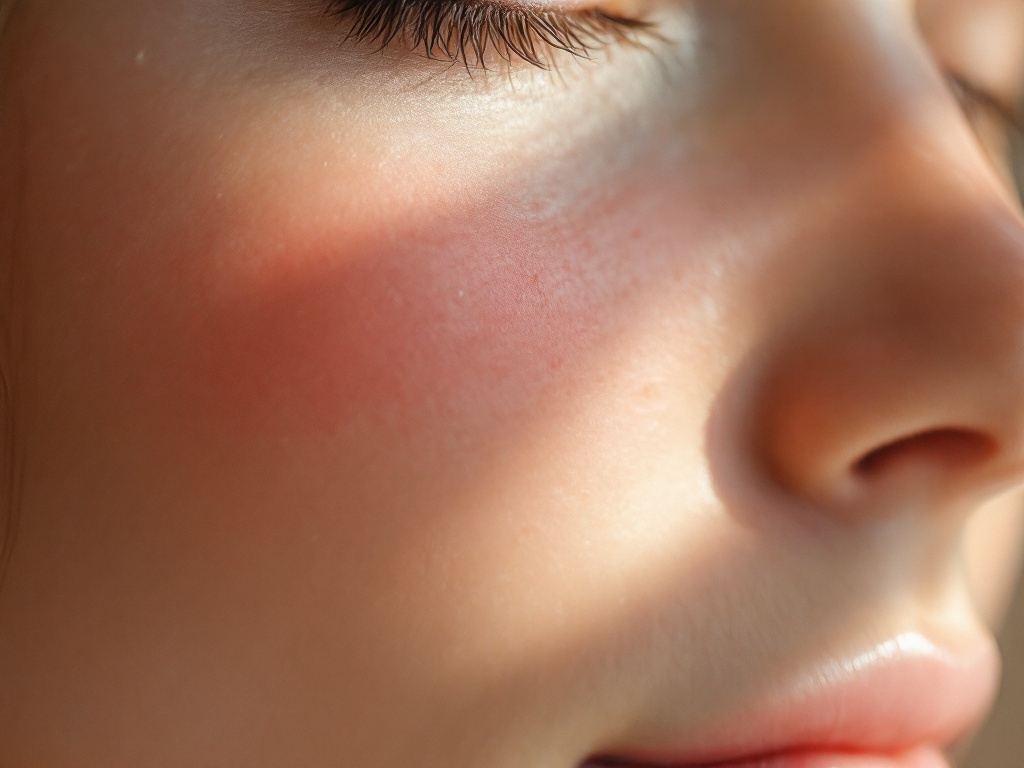
If you have papulopustular rosacea, the subtype marked by red bumps and pus-filled lesions, your dermatologist will likely reach for one of two topical prescriptions first: metronidazole (usually 0.75% or 1%) or ivermectin 1% cream. Both are considered first-line. Both are well tolerated. But they are not interchangeable, and the clinical trial record gives us a clearer picture than most patients realize.
How metronidazole works, as far as we know For an independent overview, see Papulopustular rosacea: bumps and pustules, treatment options.
Metronidazole is technically an antibiotic, but its benefit in rosacea almost certainly does not come from killing bacteria. At the concentrations used on skin, its main contribution appears to be anti-inflammatory and antioxidant activity: it reduces reactive oxygen species produced by neutrophils, the immune cells that drive much of the visible inflammation in rosacea lesions. This matters because rosacea is increasingly understood as a disorder of innate immune overactivity, with elevated cathelicidin peptides and kallikrein 5 enzyme activity amplifying redness and papule formation. Metronidazole dampens part of that cascade. It has been used since the late 1980s, is inexpensive as a generic, and has decades of safety data behind it.
How ivermectin works, and why the dual mechanism matters
Ivermectin 1% cream, approved in 2014, brings two mechanisms to the table. First, it is a potent anti-parasitic against Demodex mites, the microscopic organisms that live in facial hair follicles. People with rosacea carry Demodex at densities roughly five to ten times higher than people without the condition, and mite fragments and their associated bacteria appear to trigger inflammatory signaling through toll-like receptor pathways. Second, ivermectin has its own direct anti-inflammatory effect, reducing production of inflammatory cytokines independent of its action on mites. In other words, it targets both a suspected upstream trigger and the downstream inflammation.
The head-to-head trial
The most cited direct comparison is a 16-week randomized investigator-blinded study of roughly 960 patients comparing ivermectin 1% once daily against metronidazole 0.75% twice daily. Ivermectin came out ahead on the primary endpoint: about an 83% reduction in inflammatory lesion counts versus roughly 74% for metronidazole. More patients on ivermectin reached clear or almost clear status. An extension study following those patients also found that remission after stopping treatment lasted longer in the ivermectin group, a median of several weeks more before relapse. That relapse data is arguably the more meaningful finding for a chronic relapsing condition.
A few honest caveats. The comparison used metronidazole 0.75%, and some clinicians argue the 1% formulation might have narrowed the gap, though pharmacology studies suggest the two strengths perform similarly. The study was industry sponsored, which does not invalidate it but is worth knowing. And a nine percentage point difference in lesion reduction, while statistically real, is modest for an individual patient. Plenty of people do very well on metronidazole.
Tolerability and the paradox flare
Both agents are gentle compared with older options like benzoyl peroxide or topical retinoids. Burning, dryness, and irritation occur in a small minority of users for either drug. One quirk specific to ivermectin: some patients experience a temporary worsening in the first one to two weeks, thought to reflect an inflammatory reaction to dying mites, sometimes called a Demodex die-off response. It typically settles on its own, but patients who are not warned about it often quit early. That counseling point alone changes adherence.
Practical considerations
Dosing favors ivermectin: once daily versus twice daily for most metronidazole formulations, though 1% metronidazole gel is also once daily. Cost usually favors metronidazole, which has been generic for years, while generic ivermectin cream availability varies by market and insurance coverage. For patients with visible Demodex signs, such as follicular scaling sometimes described as a frosted appearance, or those who failed metronidazole, ivermectin is the more logical choice. For mild disease, cost-sensitive patients, or maintenance after clearance, metronidazole remains entirely reasonable.
What neither drug does
This is the part most often misunderstood. Neither cream meaningfully treats background erythema, the persistent diffuse redness of the central face, and neither touches telangiectasias, the visible broken vessels. Those features respond to alpha-adrenergic agonist gels for temporary redness reduction, or vascular laser and intense pulsed light for durable vessel clearance. A patient whose main complaint is redness rather than bumps will be disappointed by either cream, not because the drug failed but because it was aimed at the wrong target.
Bottom line
For papulopustular rosacea, the trial evidence gives ivermectin a real but moderate edge in lesion clearance and time to relapse, plausibly because it addresses Demodex overgrowth in addition to inflammation. Metronidazole remains a proven, affordable, well tolerated workhorse. The right choice depends on disease severity, prior treatment response, cost, and whether mites appear to be part of the picture. Either way, set expectations correctly: these are treatments for bumps, not for redness, and rosacea management is a long game of control rather than cure.
Related reading: Ivermectin vs. Metronidazole: What the Evidence Actually Says About Rosacea's Two Workhorse Creams.
More in Explainer
View all →- Ivermectin vs. Metronidazole: What the Head-to-Head Data Actually Shows for Papulopustular Rosacea
- Ivermectin, Metronidazole, or Azelaic Acid: How the Three First-Line Topicals for Rosacea Actually Compare
- Low-Dose Doxycycline for Rosacea: Why 40 mg Is Not Really an Antibiotic
- Ivermectin vs. Metronidazole: What the Evidence Actually Says About Rosacea's Two Workhorse Topicals