
Explainer · August 1, 2026 · 5 min · By Nolan Achterman
Ivermectin vs. Metronidazole: What the Evidence Actually Says About Rosacea's Two Workhorse Creams
Both topicals have decades of data behind them, but they work through different mechanisms and are not interchangeable. Here is a plain-English comparison for people with papulopustular rosacea.
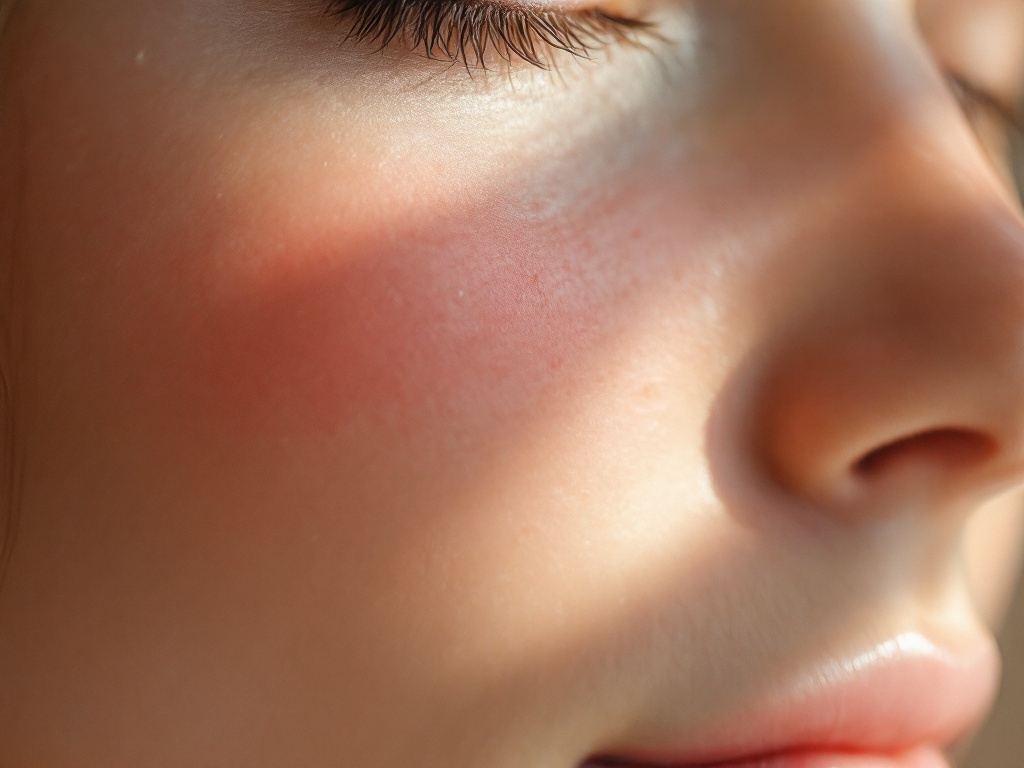
If you have been prescribed a cream for the bumps and pustules of rosacea, odds are strong it was one of two drugs: topical metronidazole or topical ivermectin. Both are considered first-line options for papulopustular rosacea in most dermatology guidelines. Both are generally well tolerated. But they are not the same medication doing the same job, and the differences matter when deciding what to try, what to expect, and when to switch.
What each drug actually does For an independent overview, see Rosacea treatment: topical and oral options.
Metronidazole, available as a 0.75 percent gel, cream, or lotion and a 1 percent cream, is technically an antibiotic. But in rosacea, its benefit does not appear to come from killing bacteria. At the concentrations used on skin, its main measurable effect is anti-inflammatory and antioxidant: it reduces reactive oxygen species produced by neutrophils, the immune cells that drive much of the redness and pustule formation in rosacea. This is why long-term use does not raise the same antibiotic resistance concerns as oral antibiotics.
Ivermectin 1 percent cream works on two fronts. First, it is anti-parasitic, and it targets Demodex folliculorum, the microscopic mite that lives in human hair follicles. People with rosacea tend to carry Demodex at densities several times higher than people without it, and the mites, along with bacteria they carry, are believed to trigger an exaggerated innate immune response in susceptible skin. Second, ivermectin has its own direct anti-inflammatory activity, dampening the production of inflammatory cytokines. So it addresses both a suspected trigger and the inflammation itself.
Head-to-head results
This is not a case where the evidence is murky. A large randomized trial comparing ivermectin 1 percent cream once daily against metronidazole 0.75 percent cream twice daily over 16 weeks found ivermectin superior on the primary endpoint: an approximately 83 percent reduction in inflammatory lesions versus roughly 74 percent for metronidazole. More patients on ivermectin reached clear or almost clear skin. Follow-up data also suggested that remissions after stopping ivermectin lasted longer, with a median time to relapse of around 115 days versus about 85 days for metronidazole.
That said, metronidazole is far from obsolete. Its effect size is real, its safety record spans more than 30 years, it is inexpensive in generic form, and some patients respond well to it and poorly to ivermectin. Individual response varies more than trial averages suggest.
Timelines and the flare question
Neither drug is fast. Metronidazole typically shows meaningful improvement at 3 to 6 weeks, with full benefit closer to 9 weeks or beyond. Ivermectin trials ran 12 to 16 weeks, and many patients see the steepest gains in the second and third month.
One quirk specific to ivermectin: a minority of patients report a temporary worsening in the first 1 to 2 weeks, sometimes attributed to the inflammatory debris released as mites die off. This usually settles on its own. Knowing about it in advance prevents people from abandoning a treatment that was about to start working.
Tolerability
Both are among the gentler topicals in dermatology. Metronidazole can cause mild stinging, dryness, or itching, more often with gel formulations, since gels tend to contain more alcohol. Ivermectin cream is formulated in a moisturizing base and, in trials, produced fewer irritation complaints than metronidazole. For patients with very reactive, easily stung skin, that base can be a practical advantage. Neither drug is meaningfully absorbed into the bloodstream at normal use, though ivermectin is generally avoided in pregnancy because safety data are limited.
What neither drug treats well
Both medications target papules and pustules. Neither does much for persistent background redness, which is driven by dilated and structurally abnormal blood vessels rather than active inflammation. That symptom responds better to vascular lasers, intense pulsed light, or alpha-agonist topicals such as brimonidine or oxymetazoline. Neither treats thickened skin changes or ocular symptoms. Expecting a bump-fighting cream to erase diffuse flushing is one of the most common sources of patient disappointment.
A reasonable decision framework
For mild to moderate papulopustular rosacea, ivermectin has the stronger comparative evidence, a once-daily schedule, and a plausible dual mechanism, which is why many clinicians now reach for it first. Metronidazole remains a solid choice when cost is a constraint, when a patient has done well on it before, or when ivermectin is unavailable or not tolerated. If one fails after a genuine 12 to 16 week trial, switching to the other is entirely reasonable, and combining a topical with a low-dose oral anti-inflammatory antibiotic such as sub-antimicrobial doxycycline is a standard next step for stubborn cases.
The practical takeaway: these are complementary tools with different mechanisms, not duplicates. Give whichever one you use a full trial measured in months, track your lesion counts rather than day-to-day redness, and treat persistent flushing as a separate problem needing separate tools.
Related reading: Ivermectin vs. Metronidazole: What the Evidence Actually Says About Rosacea's Two Workhorse Topicals.
Keep reading
Low Dose Doxycycline for Rosacea: Why the Pill That Works Is Not Really an Antibiotic
Read nextMore in Explainer
View all →- Ivermectin, Metronidazole, or Azelaic Acid: How the Three Main Topicals for Rosacea Actually Compare
- Ivermectin, Metronidazole, or Azelaic Acid: How the Three Main Topicals for Papulopustular Rosacea Actually Compare
- Low Dose Doxycycline for Rosacea: Why 40 mg Is Not Just a Weaker 100 mg
- Low Dose Doxycycline for Rosacea: Why the Pill That Works Is Not Really an Antibiotic