
Explainer · July 15, 2026 · 6 min · By Nolan Achterman
Ivermectin, Metronidazole, or Azelaic Acid: How the Three Main Topicals for Rosacea Actually Compare
All three are first-line prescriptions for papulopustular rosacea, but they work through different mechanisms and suit different patients. Here is what the evidence says about choosing among them.
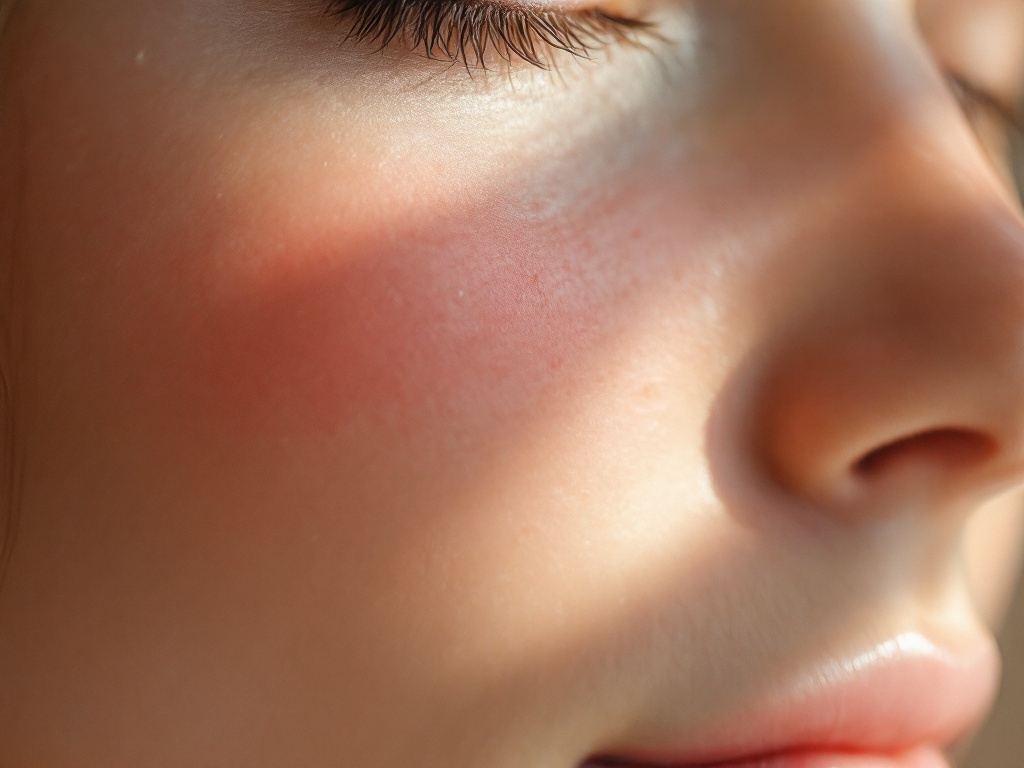
Ask a dermatologist to treat the bumps and pustules of rosacea and you will almost certainly walk out with one of three prescriptions: topical ivermectin, topical metronidazole, or azelaic acid. All three carry regulatory approval for papulopustular rosacea, all three appear in major treatment guidelines, and all three are frequently described to patients as roughly interchangeable. They are not. Each drug acts through a distinct mechanism, and understanding those mechanisms helps explain why one patient clears on metronidazole while another only responds to ivermectin.
What each drug actually does For an independent overview, see Rosacea treatment: topical and oral options.
Topical ivermectin, sold as a 1 percent cream, has a dual action that makes it unusual. First, it is an antiparasitic that kills Demodex mites, the microscopic organisms that live in facial hair follicles. People with rosacea tend to carry Demodex at densities several times higher than people without the condition, and the mites, along with bacteria they carry, appear to trigger inflammatory signaling in the skin. Second, ivermectin has direct anti-inflammatory effects, reducing production of inflammatory cytokines independent of its mite-killing action. Which of these two effects matters more is still debated, but the drug does not depend on Demodex alone.
Metronidazole, available as a gel, cream, or lotion in 0.75 and 1 percent strengths, is technically an antibiotic, but that is almost certainly not how it works in rosacea. Rosacea is not a bacterial infection, and metronidazole shows benefit at concentrations and in contexts where its antimicrobial action is irrelevant. The current understanding is that it works as an anti-inflammatory and antioxidant, reducing reactive oxygen species produced by neutrophils, the immune cells that drive much of the redness and pustule formation.
Azelaic acid, a 15 percent gel or foam, is a naturally occurring dicarboxylic acid. It reduces inflammation partly by inhibiting kallikrein 5, an enzyme in the skin that activates cathelicidin peptides. Cathelicidin overactivity is one of the better-established molecular abnormalities in rosacea, so azelaic acid targets something close to the root of the inflammatory cascade. It also has mild antimicrobial and antioxidant properties.
What head-to-head trials show
The most cited direct comparison is a large randomized trial that pitted ivermectin 1 percent cream against metronidazole 0.75 percent cream over 16 weeks. Ivermectin came out ahead: a greater reduction in inflammatory lesion counts and a higher proportion of patients rated clear or almost clear. Follow-up data also suggested that patients who cleared on ivermectin stayed in remission longer after stopping treatment than those who cleared on metronidazole. Network meta-analyses that pool available trials generally rank ivermectin first for lesion reduction among the three topicals.
Azelaic acid has been compared with metronidazole in several trials, with results that mostly favor azelaic acid modestly or show equivalence. Direct comparisons between azelaic acid and ivermectin are sparse, so their relative ranking rests largely on indirect statistical comparison, which is weaker evidence.
A practical caveat: the margins between these drugs are real but not enormous. All three beat vehicle convincingly, and a meaningful share of patients does well on any of them.
How tolerability differs
Metronidazole is generally the gentlest of the three and is often the default for patients with very reactive skin. Ivermectin is also well tolerated, with some patients reporting a transient flare in the first weeks that is sometimes attributed to the die-off of mites, though this is not firmly proven. Azelaic acid is the most likely to cause stinging, burning, or tingling on application, particularly in the first few weeks. For many patients this fades with continued use, but for some it is a dealbreaker, which matters because adherence drives outcomes in a chronic condition.
Azelaic acid has one advantage the others lack: it can improve post-inflammatory pigmentation, which is relevant for patients with darker skin tones in whom rosacea often leaves discoloration alongside redness.
Choosing in practice
Some rough patterns emerge from the evidence. Ivermectin is a reasonable first pick when inflammatory papules and pustules dominate, especially if Demodex involvement is suspected, for example when there is significant itching or follicular scaling. Metronidazole suits highly sensitive skin and remains a solid, inexpensive workhorse, particularly in generic form. Azelaic acid appeals when pigmentation is a concern or when a patient prefers a non-antibiotic, non-antiparasitic option, provided they can tolerate the initial sting.
Two final points deserve emphasis. First, none of these topicals treats the background redness and flushing of rosacea well. That component responds to different tools, including alpha agonist gels, vascular lasers, and trigger management. Expecting a pustule-targeted cream to erase diffuse redness sets patients up for disappointment. Second, results take time. Trials measure outcomes at 12 to 16 weeks, and abandoning a topical after three weeks tells you almost nothing about whether it would have worked. Whichever agent you and your clinician choose, the honest commitment is measured in months, not days.
Related reading: Metronidazole for rosacea: how the first-line topical works.
More in Explainer
View all →- Metronidazole, Azelaic Acid, or Ivermectin: How the Three Workhorse Topicals for Rosacea Actually Compare
- Ivermectin, Metronidazole, or Azelaic Acid: How the Three First-Line Topicals for Rosacea Actually Compare
- Ivermectin, Metronidazole, or Azelaic Acid: How the Three Big Topicals for Rosacea Actually Differ
- Ivermectin, Metronidazole, or Azelaic Acid: How the Three Big Topicals for Rosacea Actually Compare